

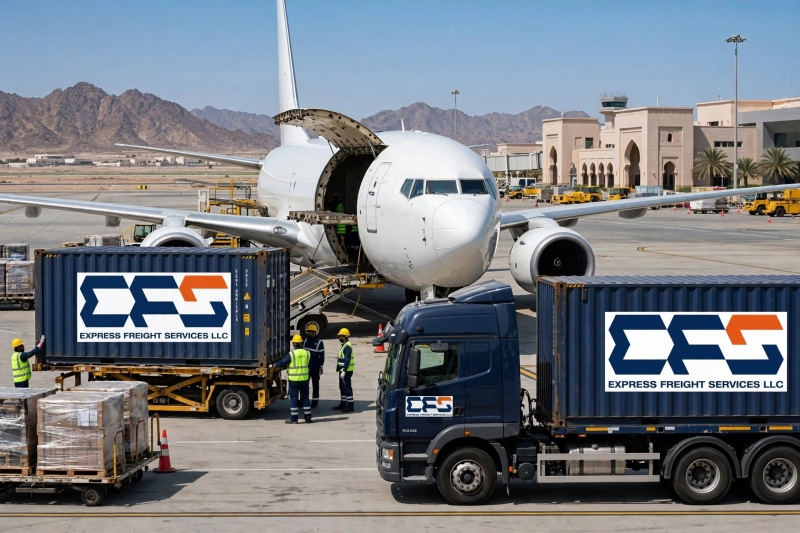
Air cargo from Al Buraimi requires a commercial invoice, packing list, air waybill (AWB), and depending on the goods, a certificate of origin, export declaration, and product-specific permits such as health certificates for food or dangerous goods declarations for restricted items. Because Al Buraimi sits on the Oman-UAE border, shipments often route through Muscat International Airport or Dubai, adding documentation around customs transit and proof of origin.
The document set that actually gets a shipment released
The exact paperwork depends on what you are shipping, where it is going, and whether the cargo stays in Oman or crosses a border first. The table below covers the most common combinations.
Why Al Buraimi is different from shipping from Muscat
Al Buraimi has no international cargo airport. Air cargo from the governorate is trucked to Muscat International Airport or, for many traders, across the nearby Hafeet border into Al Ain and then to Dubai World Central or Dubai International. That border crossing is the biggest source of paperwork problems.
The key document is the customs transit declaration, which proves the goods are moving from Oman to a UAE airport without being sold or consumed in the UAE. If the paperwork does not clearly show the cargo is in transit, customs may treat it as a UAE import and demand duties, a local import licence, or both. Experienced forwarders in the region, including Express Freight Services LLC, routinely handle this by preparing a transit bond or TIR carnet where applicable, but the exporter still needs to supply accurate invoices and packing lists that match the physical cargo exactly.
The paperwork most people get wrong
The commercial invoice is where most delays start. It is not just a receipt. Customs officers at both the Omani and UAE sides use it to classify goods, assess value, and decide whether an inspection is needed. A vague description such as “general merchandise” or “spare parts” will almost always trigger a hold. The invoice should state the precise product name, HS code, quantity, unit value, total value, currency, and the Incoterm that applies, for example FOB Muscat or DAP destination.
The packing list matters more than it looks. It tells customs how many pieces are in the shipment, what each piece weighs, and what is inside each carton or pallet. If the weights on the packing list do not match the actual cargo, the shipment can be stopped at the airline cargo terminal, re-weighed, and delayed. For cargo moving through Muscat International Airport, the ground handler Transom Cargo operates the cargo terminal and its acceptance checks include weight and piece count against the AWB.
Permits and special cargo
Food, plants, animal products, and pharmaceuticals need extra documents. A health certificate from the relevant Omani authority is standard for food exports. Live animals require veterinary certificates and airline approval before booking, and Oman Air Cargo, which operates from Muscat, publishes specific guidelines for live animal shipments. Dangerous goods need a shipper’s declaration signed by someone who has completed dangerous goods training, and the cargo must be packed and labelled to IATA standards. Valuable cargo and perishables have their own acceptance rules and often require pre-booking with the airline.
How to assemble the paperwork in the right order
Start with the commercial invoice and packing list, because every other document references them. Then confirm the destination country’s import rules, since some countries require a certificate of origin legalised by the Omani Chamber of Commerce, while others accept a plain signed declaration. Next, arrange the export declaration through a licensed customs broker or forwarder. Finally, the forwarder or airline issues the AWB once the cargo is accepted, and any transit documents are prepared before the truck leaves Al Buraimi.
A practical checklist for a first-time shipper from Al Buraimi:
- Confirm the exact consignee name and address as registered with the destination customs authority
- Prepare the commercial invoice with HS codes and Incoterms
- Prepare a packing list with piece count, dimensions, and weight per piece
- Check whether the destination needs a certificate of origin and have it legalised if required
- Arrange any product permits, health certificates, or dangerous goods declarations early
- Confirm with the forwarder whether the route goes through Muscat or Dubai and what transit documents that route requires
- Keep a copy of every document with the cargo and send a duplicate set to the consignee
What to ask a forwarder before booking
Not all forwarders in the region offer the same service. Some handle only the Muscat leg, while others manage the full border crossing and handover at a UAE airport. Ask specifically whether they provide Freight Forwarding Services in Al Buraimi that include collection from your premises, customs transit across the Hafeet border, and delivery to the airline. If you are shipping smaller volumes, ask about LCL Consolidation Services in Al Buraimi, which combine multiple shippers’ cargo into one air freight unit and can reduce cost for low-weight shipments. Also confirm whether they handle Customs Clearance Services in Al Buraimi themselves or subcontract it, since a direct broker usually resolves document queries faster.
The biggest avoidable mistake is booking the flight before the documents are ready. Airlines and ground handlers will not accept cargo with incomplete paperwork, and storage at the terminal while documents are corrected adds time and cost. Get the paperwork right first, then book the space.
Frequently Asked Questions
1.How much is air cargo per kilo?
Air cargo rates per kilo depend on the route, shipment weight, volume, and whether the cargo is general freight or a special category like perishables or dangerous goods. Airlines use chargeable weight, which is the higher of actual weight or volumetric weight calculated from the cargo’s dimensions. Rates are not fixed and change with fuel prices, season, and capacity, so a forwarder quotes per shipment rather than from a published price list.
2.What are the top 5 air cargo companies?
The largest global air cargo carriers by volume include FedEx, UPS, Qatar Airways Cargo, Emirates SkyCargo, and Cathay Cargo. In Oman, Oman Air Cargo operates from Muscat International Airport, while international carriers and freight forwarders handle most shipments from Al Buraimi through Muscat or Dubai.
3.How much is cargo per kg?
Cargo cost per kg is not a single number. It depends on chargeable weight, the origin and destination pair, the service level, and any surcharges for fuel, security, or handling. A forwarder calculates the chargeable weight from the shipment’s actual weight and volume, then applies the applicable rate for that route and service.
4.How to calculate air cargo charges?
Air cargo charges are based on chargeable weight. Calculate the volumetric weight by multiplying length, width, and height in centimetres and dividing by 6000. Compare that figure with the actual gross weight in kilograms. The higher of the two is the chargeable weight. Multiply the chargeable weight by the rate per kilo, then add any applicable surcharges such as fuel, security, and terminal handling.
View More Blogs


LCL Consolidation Services in Al Buraimi: Complete Guide for Importers
LCL consolidation lets importers in Al Buraimi ship smaller cargo volumes without paying for a full ...
Customs Clearance Services in Haima: A Complete Guide for Importers and Exporters
If you’re running trade through Haima, you already know customs can be a headache. Paperwork piles...

Freight Forwarding Services in Haima: A Complete Guide for Businesses
Running a business in Haima isn’t all sunshine. You’ve got cargo waiting, customs forms that loo...