

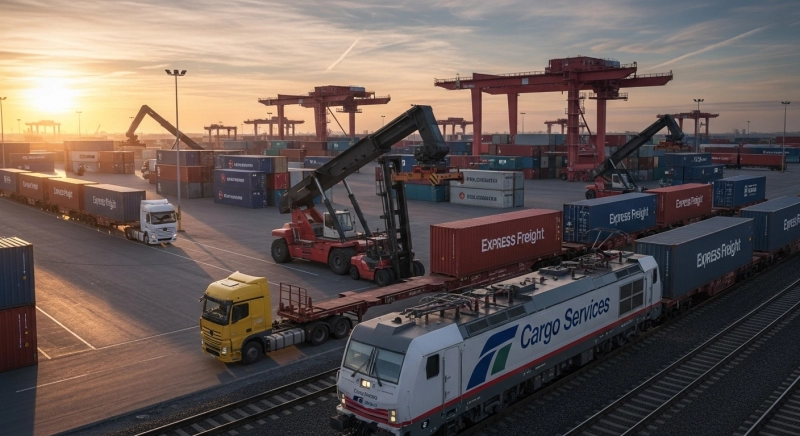
Cargo services in Dubai basically cover everything you need to move goods in and out of the UAE air, sea, road, whatever fits the job. It starts with pickup and proper packing, runs through documentation and customs, and ends with final delivery at your doorstep. Along the way, you get tracking, duty/VAT compliance, and a team that actually knows how Dubai’s logistics system works.
- Fast air options go through DXB or DWC. Sea freight runs through Jebel Ali if you want something more economical.
- Door-to-door is available, and yes, that includes customs, insurance, and live updates.
- You can pick FCL, LCL, air express, or cross-border road freight to the GCC.
Express Freight Services also handles the tricky stuff regulated cargo, heavy pieces, oversized machinery using proper SOPs that have been tested in real operations.
Who is this for and why EFS?
If you’re importing raw materials, exporting finished goods, or shipping e-commerce orders, you need a partner that isn’t guessing their way through Dubai’s logistics network. EFS brings local Dubai experience plus global carriers into one setup, so the whole process feels simpler and way less stressful.
You’ll notice:
- Quicker lead times because routing is planned properly
- Fewer penalties/delays thanks to customs specialists who double-check things
- Clear pricing and steady updates from someone who actually picks up the phone
What types of cargo services do we handle in Dubai?
1. Air Freight (DXB/DWC)
Next-flight-out, consolidated loads, and even dangerous goods (IATA compliant).
2. Sea Freight (Jebel Ali)
FCL, LCL, breakbulk, Ro-Ro, reefers whatever fits your cargo type.
3. Road Freight (GCC)
Daily departures to KSA, Oman, Qatar, Bahrain, Kuwait.
4. Customs & Compliance
E-MIRSAL 2 filings, HS codes, duty/VAT work, permits, the whole package.
5. Extras
Insurance, crating/packing, warehousing, fulfillment, returns. all the bits that make freight easier.
How does customs clearance in Dubai really work?
It’s not as mysterious as it looks:
- Pre-alert docs check: invoice, packing list, COO, permits
- HS code classification + duty/VAT estimation
- E-MIRSAL 2 declaration
- Inspection (if customs flags it)
- Duty/VAT payment
- Gate pass + release + delivery
If you want fewer surprise holds, use a clearance team that checks HS codes and permits before the cargo lands.
What will this cost and how do we keep numbers predictable?
Pricing usually depends on how you ship (air/sea/road), the size/weight, the lane you choose, seasonal fluctuations, and whatever surcharges apply (BAF, GRI, security, etc.).
How EFS keeps things fair:
- Multiple carrier options so you’re not stuck with one rate
- LCL groupage to reduce per-shipment cost
- Itemized invoices with no mystery “extras”
If you want specifics, ask for a lane-wise quote. It’s easier than guessing.
Real examples from our Dubai operations
- Electronics – DXB → Riyadh
Air + road cross-dock, landed in 36 hours with full milestone tracking. - Automotive parts – Hamburg → Jebel Ali
LCL import with duty optimization — total landed cost dropped by 14%. - Food & beverage – India → Dubai
Reefer sea freight with pre-cool chain checks — zero spoilage across 8 containers. - Construction machinery – Dubai → Salalah
Oversized cargo moved via low-bed trailers, permits and escorts included.
How do we keep shipments visible and on time?
- Unified tracking across carriers
- SLA-based milestones: pickup → customs in/out → departure → arrival → delivery
- Weekly KPI dashboards for bigger accounts
Quick answers (just the essentials)
- DXB → EU (air): ~2–5 days door-to-door
- Jebel Ali → Indian Subcontinent (sea): 5–12 days port-to-port
- Insurance: All-risk or named-perils available
- Tracking: Portal + email/SMS alerts
- Pickup in Dubai: Same day if cargo is ready before noon
Why so many Dubai companies stick with EFS
- One partner from pickup to delivery
- A compliance-first mindset (fewer customs headaches)
- Mode-neutral planning we choose the best mix for cost vs. speed
- Strong GCC distribution + international routing experience
FAQ
Q1. What documents do I need for imports to Dubai?
Invoice, packing list, HS codes, COO, permits (if needed), and the consignee TRN for VAT.
Q2. Do you handle DG and temp-controlled cargo?
Yes DG under IATA/IMDG rules, and cold-chain setups are fully validated.
Q3. Can you ship e-commerce across the GCC?
We can pick, pack, label, and deliver through road networks, including COD if required.
Q4. FCL vs LCL?
FCL = full container.
LCL = share the space and cost with other shippers.
Q5. How are duties and VAT calculated?
By HS code, shipment value, and UAE VAT rules. We calculate estimates pre-arrival.
Q6. Do you offer packing and insurance?
Yes export crating, ISPM-15 pallets, plus all-risk insurance.
Contact Express Freight Services Today
If you want to streamline your logistics in Dubai smoother customs, better routing, and fewer last-minute surprises reach out and we’ll walk you through the best options for your lanes and cargo.
Phone:+(968) 24790202
Email:info@expressfreightoman.com
Website: https://www.expressfreightoman.com/
-
Tags:
View More Blogs


India to GCC Shipping Through Sohar Port: A Guide for Businesses
India to GCC shipping has matured into one of the most dependable trade corridors in the Indian Ocea...
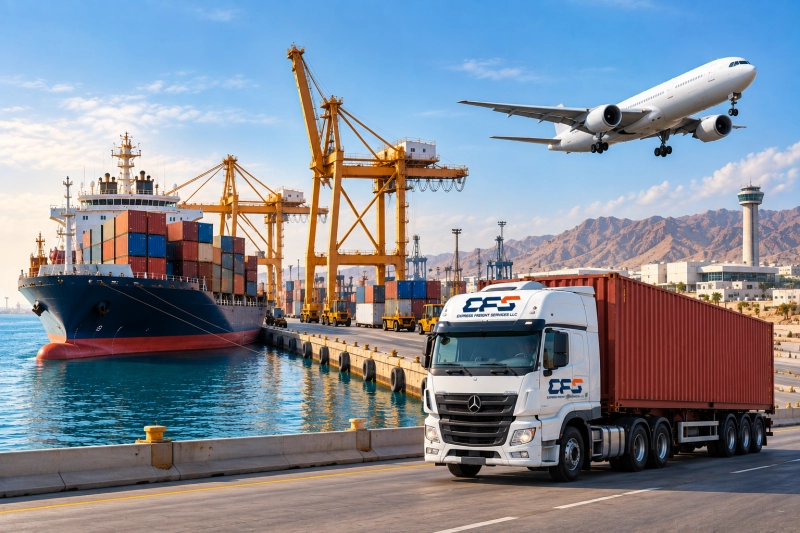
Land, Sea and Air Transport in Duqm: A Complete Guide for Businesses
Duqm’s transport network has grown into one of Oman’s most strategically important logistics cor...
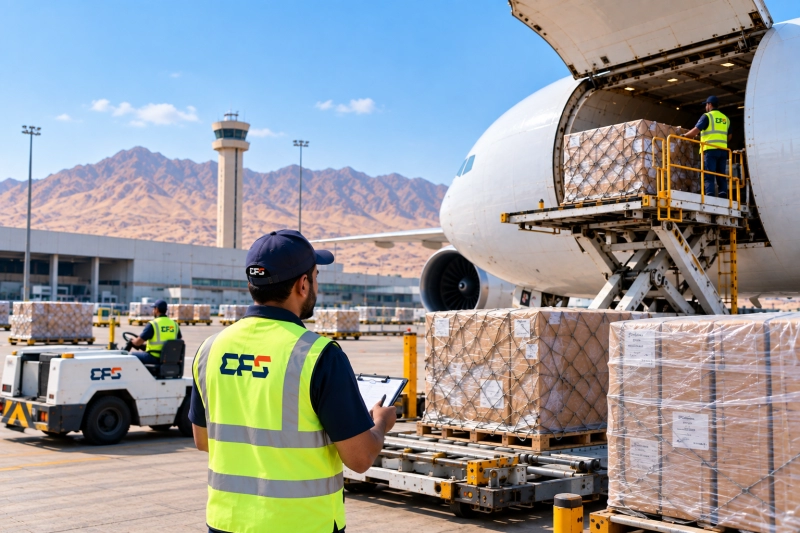
How Much Does It Cost for Air Cargo Service in Bidiyah: A Complete Guide by Express Freight Services LLC
Air cargo is the backbone of fast international trade, but for businesses in Bidiyah, the cost quest...