

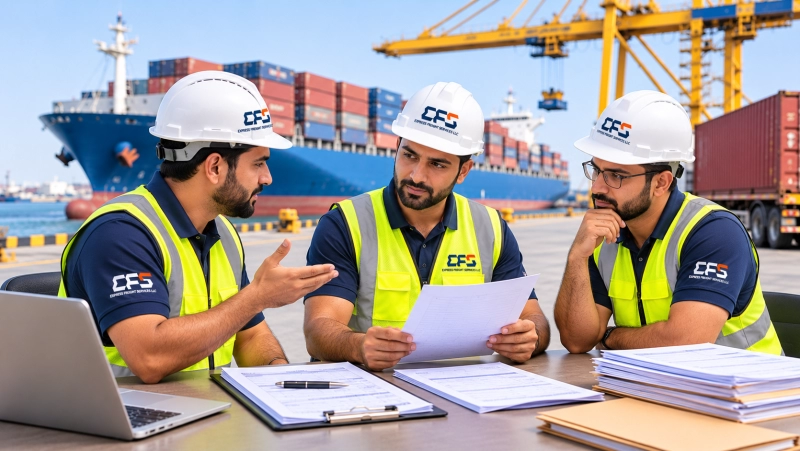
Customs clearance in Rustaq involves preparing paperwork, paying assessed duties, and coordinating inspection at the local customs office before goods can legally enter or leave Oman. The fastest route is a licensed clearance agent who understands Omani import rules and requirements at South Batinah checkpoints.
Express Freight Services LLC regularly handles shipments through Rustaq for commercial and personal cargo, and the process is more predictable when documentation is complete before the truck reaches the gate.
What the Clearance Process Actually Involves
Clearing goods through Rustaq is a sequence of document checks, classification, valuation, duty payment, and inspection. The local customs office in Tumayt Al Jadeed operates around the clock, helping when a vehicle arrives late from a UAE border crossing or Sohar Port.
The standard flow:
- Submit the commercial invoice, packing list, and transport document.
- Assign the correct HS code for each item.
- Customs reviews the declared value and calculates duty and VAT.
- Payment is made through the approved system.
- Inspection may be physical or documentary, depending on the goods.
- The shipment is released for delivery within Rustaq or onward transport.
Documents You Will Need
Missing paperwork is the most common reason shipments sit at the Rustaq office. The core set for commercial cargo includes:
- Commercial invoice with accurate values
- Packing list showing weights, quantities, and package types
- Bill of lading for sea freight or airway bill for air cargo
- Certificate of origin, especially for GCC or preferential tariff claims
- Import permits for regulated goods such as food, chemicals, or medical equipment
For personal effects or household goods, a detailed inventory and proof of residence or employment status in Oman is usually requested. The description on the invoice, packing list, and declaration must match exactly.
Duties, VAT, and How Goods Are Classified
Oman applies the GCC Common Customs Tariff, with most goods attracting a standard rate of 5 percent. Alcohol and tobacco are taxed significantly higher, while many basic foodstuffs and industrial inputs are exempt or reduced. VAT, currently 5 percent in Oman, is applied on the customs value plus duty.
The HS code drives everything. A vague description like “machine parts” will trigger a query, while a precise six-digit or eight-digit code with a clear description moves faster. A customs broker or freight forwarder can classify goods before arrival, avoiding rework at the counter.
Local and Cross-Border Considerations
Rustaq sits inland, so most cargo arrives by road from Sohar Port, Muscat, or the UAE border at Al Ain or Hatta. Clearance often happens in two stages: port or border processing first, then final inspection and release at the Rustaq customs office.
For shipments originating in the UAE, the exporter must complete UAE exit procedures before Omani import clearance begins. Working with a single provider that handles both sides, such as Express Freight Services LLC, reduces the chance of a truck being held at the border because one document was issued incorrectly.
LCL Consolidation Services in Rustaq are worth considering for smaller commercial shipments. Instead of paying for a full container or truck, cargo shares space with other consignments, and the clearance agent files one consolidated declaration with separate invoices for each importer. This works well for retail goods, spare parts, and e-commerce stock moving into South Batinah regularly.
Common Mistakes That Delay Clearance
The same issues come up repeatedly at the Rustaq office, and most are avoidable.
- Submitting a pro forma invoice instead of the final commercial invoice
- Declaring a value that does not match the payment record or bank transfer
- Using a generic HS code copied from a previous unrelated shipment
- Forgetting that some goods need prior approval from a ministry before import
- Sending original documents with the truck driver instead of uploading them digitally
Keep a digital folder with scanned copies of the importer’s commercial registration, tax card, and authorised signatory details. Customs clearance in Rustaq moves faster when the broker can attach these to the declaration without waiting for the importer to respond.
Regulated and Prohibited Goods
Oman strictly prohibits alcohol, pork products, narcotics, gambling materials, and items considered offensive to religious or cultural values. Attempting to clear these goods leads to seizure and possible penalties, not just delay.
Some goods are not prohibited but require permits. Pharmaceuticals, medical devices, food products, cosmetics, and chemicals may need approval from the relevant Omani authority before the customs declaration is accepted. Start the permit process before the goods leave the supplier.
Choosing a Clearance Partner
Freight forwarding services in Rustaq range from solo brokers who handle paperwork only to full-service providers that manage transport, warehousing, and final delivery. The right choice depends on volume, frequency, and the type of goods.
For occasional personal shipments, a local broker with a desk near the customs office is often enough. For recurring commercial cargo, look for a provider that offers door-to-door coordination, HS code support, and a single point of contact for both the UAE and Oman legs. Ask how they handle inspections, what happens if a document is rejected, and whether they provide proof of delivery after release.
Reach out to our team today for help with your next shipment through Rustaq, whether it is a single pallet or a recurring commercial consignment.
Frequently Asked Questions
1.How long does customs clearance take in Rustaq?
A routine commercial shipment with complete documents typically clears within one to two working days. Physical inspections, missing permits, or HS code queries can extend this by several days.
2.Can I clear goods myself without an agent?
Yes, but the process requires familiarity with the Bayan system, HS classification, and valuation rules. Most importers use a licensed broker to avoid costly errors and repeated trips to the customs office.
3.What happens if my documents are rejected?
The declaration is returned for correction. You or your agent must fix the specific issue, resubmit, and wait for re-review. Pre-checking documents before the cargo arrives saves time.
4.Do I need a local importer of record in Oman?
For commercial imports, the importer must have a valid Omani commercial registration and tax number. Foreign companies without a local entity typically use a licensed importer of record service.
5.Are there storage charges if my cargo is held?
Yes, ports and customs facilities apply storage or demurrage charges after a free period. The free period varies by location and cargo type, so resolve clearance issues quickly.
View More Blogs

Freight Forwarding Services in Liwa: Shipping Methods, Documents and Costs
Freight forwarding in liwa is the service of managing a company's goods by sea, air and/or land. As ...

Sea Cargo Shipping from Liwa: Process and Transportation Options Process and Requirements
Sea cargo shipping from Liwa begins with a straightforward reality: the oasis town sits roughly 200 ...

Import Customs Clearance in Al Hamra: Complete Guide for Importers
Import customs clearance in Al Hamra means getting official approval from Oman Customs to bring good...