

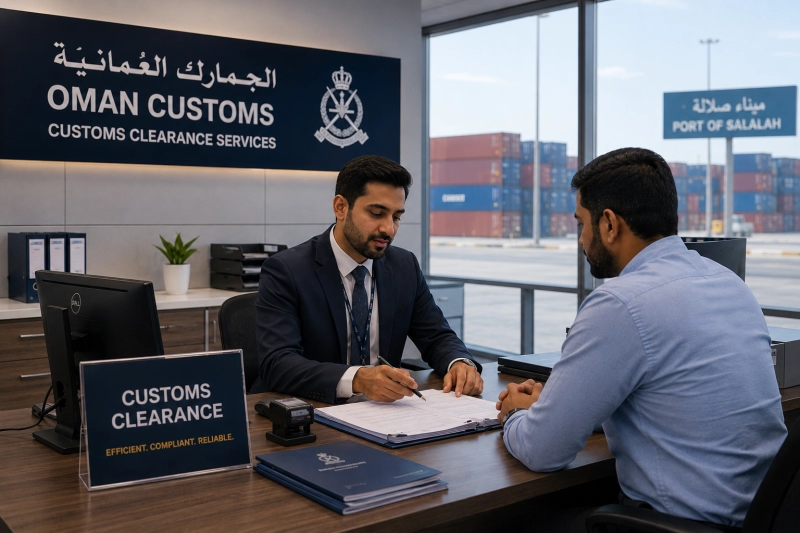
Your first international shipment is on its way. The supplier confirmed dispatch, the vessel is sailing and everything looks fine. Then you get a message: your cargo has arrived at Muscat Port and needs customs clearance before it can be released. And that's the moment most first-time importers realise they have no idea what to do next.
Knowing how to get customs clearance is one of those things nobody teaches you until something goes wrong. This guide exists to change that. At Express Freight Services LLC we work with new importers regularly and we see the same confusion come up every time. So here is the whole process laid out in plain terms, with no jargon and no skipping the parts that actually matter.
Why Customs Clearance Matters More Than Most People Realise
Customs clearance is the official process that allows your goods to legally enter Oman. It's not optional and it's not a formality. Every commercial shipment that arrives by sea, air or road has to go through it, regardless of value, size or what's inside.
When it goes smoothly you barely notice it. When it doesn't, your cargo sits at the port and storage charges start adding up by the day.
What Happens If You Skip It or Get It Wrong
Missing or incorrect documents can result in:
- Your shipment being held at Muscat Port or Sohar Port until corrections are filed
- Demurrage and storage fees that sometimes cost more than the goods themselves
- Fines for incorrect declarations or wrong HS code classification
- In serious cases, goods being seized or returned to the sender
None of that is unusual. It happens to first-time importers more often than it should, usually because of paperwork errors that were entirely avoidable.
Step-by-Step: How to Get Customs Clearance in Oman
The process in Oman runs through ROP (Royal Oman Police) Directorate General of Customs. Since 2020 almost everything is handled electronically through a platform called Bayan. Here is how it works from the moment your cargo arrives.
Step 1: Prepare Your Documents Before the Cargo Arrives
This is the step that most first-timers get wrong. They wait until the cargo is at port before gathering paperwork. By then you're already paying storage fees.
Get your documents ready before the vessel sails from the origin port if possible.
The Documents You Actually Need
Commercial Invoice: must show the supplier's name, buyer's name, full description of goods, unit price, total CIF value and currency. The HS code for each product line needs to be 12 digits under the updated GCC tariff system
Packing List: itemised breakdown of what's in each box or pallet, including weights and dimensions
Bill of Lading (sea) or Air Waybill (air): the transport document issued by the shipping line or airline
Certificate of Origin: confirms where the goods were manufactured. Required for duty rate calculation and mandatory for preferential rates under trade agreements like the India-Oman CEPA
MOCIIP Import Permit: required for regulated goods including food, electronics and cosmetics. If your goods fall into these categories you need this permit before your cargo arrives at port
Missing any of these will hold up your clearance.
Step 2: Submit Your Declaration Through the Bayan System
Once your documents are ready, your customs declaration is submitted electronically through the Bayan single-window system. This is where ROP customs receives your entry, checks the declared value, verifies the HS code and decides how to process the shipment.
If you are working with a licensed customs agent they will file this on your behalf. If you are self-clearing you need a registered importer account on the Bayan portal.
After submission, understanding the initiated customs clearance process helps you know what status updates to expect and how long each stage typically takes.
Understanding the Three Inspection Lanes
Bayan assigns your shipment to one of three lanes based on a risk assessment:
Green Lane: Documents are verified and the shipment is released automatically. No physical inspection required. This is the fastest outcome.
Yellow Lane: Customs requires a document check before releasing the goods. An officer reviews your paperwork. Usually adds 1 to 2 days.
Red Lane: Physical inspection of the cargo is required before release. An officer opens and checks the shipment. This can add several days and sometimes incurs an inspection fee.
New importers and new products are more likely to land in Yellow or Red lane simply because the system has no history for them. That is normal. Accurate documentation and correct HS codes reduce the chances of escalation significantly.
Step 3: Pay Your Import Duty and VAT
Once the declaration clears review, your duty and tax assessment is issued.
How Oman Import Duty Is Calculated
Oman charges a standard 5% import duty on the CIF value of the goods. CIF means Cost plus Insurance plus Freight. So the duty is not calculated on the invoice price alone but on the total landed value including the shipping cost.
On top of that there is 5% VAT applied to the same CIF value plus the duty.
Here is a simple example:
- Invoice value of goods: OMR 1,000
- Freight and insurance to Muscat: OMR 100
- CIF value: OMR 1,100
- Import duty (5% of OMR 1,100): OMR 55
- VAT (5% of OMR 1,100): OMR 55
Total customs charges: OMR 110
Some goods attract higher duty rates (alcohol and tobacco for example) and some attract zero duty under GCC free trade provisions or preferential agreements. The HS code you declare determines which rate applies.
Step 4: Collect Your Cargo After Release
Once duties are paid and the release order is issued, your cargo is ready for collection from the port or airport cargo terminal. If you have a logistics provider managing the end-to-end process they will coordinate delivery from this point.
The Freight Forwarding Services in Oman that EFS provides cover this last stage too, including final delivery to your warehouse or business address so you're not arranging road transport separately.
Pros and Cons of Handling Customs Clearance Yourself
It is possible to self-clear in Oman for straightforward shipments but it is worth going in with realistic expectations.
Benefits of self-clearing:
- No agent fee
- Direct control over the declaration
- Can work for simple, low-value, standard goods
Challenges of self-clearing:
- Bayan portal registration and filing has a learning curve
- HS code classification errors are easy to make and expensive to fix
- Regulated goods require permits that need to be in place before submission
- Any error or query needs you to respond and resolve it directly with ROP customs
- Storage fees accumulate while you are sorting out problems
For most businesses shipping commercially it is cheaper in practice to use a licensed agent than to self-clear and make an error that causes a 3-day hold.
When Should You Hire a Customs Clearance Agent?
Honestly, for your first few shipments the answer is almost always yes.
If you're importing regulated goods, using LCL consolidation, bringing in multiple product lines with different HS codes or simply don't have time to learn the Bayan system while running a business, working with a professional is the practical choice.
There are many customs clearance companies in oman and choosing the right one makes a real difference in how smoothly your cargo moves.
What a Good Agent Actually Does for You
A licensed customs clearance agent files your Bayan declaration correctly, manages the document verification if you land in Yellow Lane, coordinates the physical inspection if you land in Red Lane and pays duties on your behalf before invoicing you. They also know when to flag issues before submission rather than discovering them after your cargo is already held.
The Customs Clearance Services in Oman that Express Freight Services LLC provides go further than just filing. The team checks HS code classification before submission, verifies that import permits are in place for regulated goods and coordinates with ROP customs on your behalf from arrival to release.
Key Questions to Ask Before You Hire One
Before choosing an agent, ask whether they're a licensed customs broker registered with ROP, whether they handle your specific cargo type (food, electronics, LCL consolidation, project cargo), what their typical clearance time is for sea freight versus air freight and whether their fee includes port handling or just the declaration.
Real-World Example: A First-Time Importer in Muscat
A retail business in Muscat ordered 200 cartons of consumer electronics from a supplier in Shenzhen. First shipment, 3 CBM, shipped via LCL consolidation.
The cargo arrived at Muscat Port. Because the commercial invoice was missing the 12-digit HS codes and listed only product descriptions, the Bayan declaration was rejected automatically. The importer did not know why. The cargo sat at port for 4 days while the supplier was contacted to issue a corrected invoice. Storage and demurrage fees for those 4 days came to OMR 180.
The actual import duty on the shipment was OMR 47.
Working with a clearance agent who caught the HS code issue at the document review stage before submission would have cost less than the first day of storage fees.
If the business had also used LCL Consolidation Services in Oman rather than booking independently, the documentation would have been reviewed as part of the consolidation process before the cargo even left Shenzhen.
For businesses needing end-to-end support, cargo services in Oman that include freight, LCL and customs handling as a joined-up service eliminate most of these gaps.
Conclusion
Getting customs clearance right the first time comes down to three things: having the correct documents ready before your cargo arrives, understanding what the Bayan system is checking and knowing when it makes sense to handle it yourself versus hiring someone who does this every day.
For most new importers in Oman the cost of a mistake is higher than the cost of professional support. One incorrect HS code, one missing permit or one wrong declared value can turn a routine shipment into a 4-day hold with fees that dwarf the original duty amount.
Get Help With Your First Oman Import
If this is your first shipment or you've had clearance problems before and want to get the next one right, Express Freight Services LLC handles the entire process from declaration to delivery.
We file accurate Bayan declarations, manage ROP customs queries and coordinate port release for sea, air and LCL shipments from Muscat, Sohar, Salalah and Duqm.
Contact Express Freight Services LLC for a free consultation
Frequently Asked Questions
1. How long does customs clearance take in Oman?
It depends on the lane your shipment is assigned to. Green Lane clearance is typically same-day or next-day after submission. Yellow Lane adds 1 to 2 days for document review. Red Lane physical inspections can take 3 to 5 days or more. Having correct and complete documents before submission is the most reliable way to reduce clearance time.
2. What is the Bayan system in Oman customs?
Bayan is Oman's electronic single-window customs platform operated by ROP Directorate General of Customs. All import and export declarations are submitted through Bayan. It integrates with 74 government agencies and processes duty calculations, lane assignments and cargo release electronically. Most clearance agents file on behalf of importers using a registered Bayan account.
3. How much import duty do I pay in Oman?
The standard rate is 5% of the CIF value of your goods. CIF is the cost of the goods plus insurance plus freight to the Oman port. VAT is charged at an additional 5% of the same CIF value. Some goods have higher rates and some qualify for zero duty under GCC agreements or trade agreements like the India-Oman CEPA. The HS code you declare determines which rate applies.
4. Do I need an import permit to bring goods into Oman?
It depends on the type of goods. Food products, electronics, cosmetics, pharmaceuticals and certain other categories require an import permit from MOCIIP (Ministry of Commerce, Industry and Investment Promotion) before customs will release them. Standard general merchandise doesn't require a special permit beyond the standard customs declaration. If you're unsure whether your goods need a permit it is worth checking before the cargo departs from origin.
5. Can I do customs clearance myself in Oman without an agent?
Yes, registered importers with a Bayan account can self-declare. It is more practical for experienced shippers with simple, standard cargo than for first-time importers dealing with multiple product lines, regulated goods or LCL shipments. The risk of a documentation error and the resulting delays and fees usually makes professional clearance the more cost-effective option for new importers.
View More Blogs


India to GCC Shipping Through Sohar Port: A Guide for Businesses
India to GCC shipping has matured into one of the most dependable trade corridors in the Indian Ocea...

Land, Sea and Air Transport in Duqm: A Complete Guide for Businesses
Duqm’s transport network has grown into one of Oman’s most strategically important logistics cor...
How Much Does It Cost for Air Cargo Service in Bidiyah: A Complete Guide by Express Freight Services LLC
Air cargo is the backbone of fast international trade, but for businesses in Bidiyah, the cost quest...