

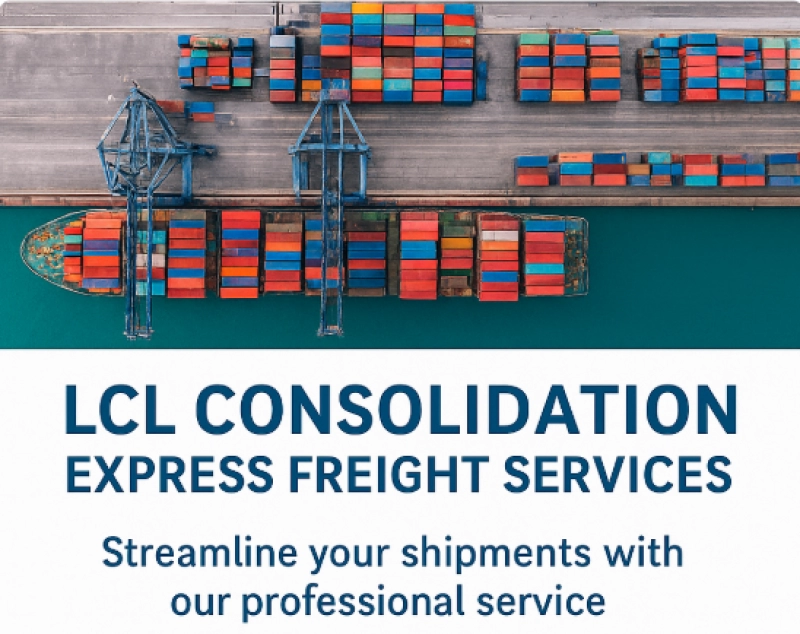
LCL consolidation has become a pretty practical option for businesses that don’t always have enough goods to fill up an entire container. Instead of sitting around waiting to build a full load or paying for a bunch of empty space companies can just share a container with other shipments going in the same direction. It makes international shipping way more realistic, especially for smaller or frequent orders that can’t justify an FCL every time.
For a lot of importers and exporters, LCL just feels easier. You keep your goods moving, you don’t blow your budget, and you don’t have to stress about filling a huge container every single time. In this blog, we’re breaking down what LCL consolidation actually means, how the whole thing works, and when it makes sense to choose this method through a reliable partner like Express Freight Services.
What Is LCL Consolidation?
LCL stands for Less Than Container Load, which is really just a fancy way of saying your shipment isn’t big enough to fill an entire container by itself. Instead of paying for the whole box, your goods get packed in with shipments from other businesses going in the same direction. Everyone shares the space, and you only pay for the chunk your cargo actually takes up no paying for empty corners.
It’s a pretty handy approach for ocean freight more affordable, more flexible and perfect for businesses that ship smaller quantities or send things out often. You don’t have to wait and pile up inventory just to justify a full container. With the right logistics partner managing the consolidation, your shipment stays organised and moves from origin to destination without drama.
How LCL Consolidation Works
The LCL process is built around combining smaller shipments into one organized container. It starts when your cargo reaches the warehouse or CFS. There, it’s checked, measured and sorted for grouping. Once all the shipments heading to the same destination are collected, they’re packed together inside a single container.
Once everything’s packed in and the container is finally sealed, it gets loaded onto the vessel and heads out. From there, the freight forwarder keeps an eye on it the whole way tracking updates, making sure it’s moving like it’s supposed to. When the container reaches the destination port, it’s taken to a deconsolidation facility, where all the different shipments get unpacked, sorted and set up for pickup or last-mile delivery. Even though the container is shared by multiple shippers, a well-handled consolidation process keeps things organised so nothing gets lost or mixed up along the way.
Key Benefits of LCL Shipping
LCL is one of those shipping methods that just makes sense when you’re moving smaller loads. The biggest win? Cost savings. You only pay for the space your goods use, which makes ocean freight much more affordable if you’re not shipping container-sized volumes.
It also gives you flexibility. You can send smaller batches whenever you need to, instead of sitting on inventory for weeks waiting to “fill up.” This helps reduce storage costs and keeps your supply chain flowing instead of stalling. And since you’re not tied to big volumes, businesses of all sizes can ship more efficiently. With proper coordination, LCL becomes a reliable, steady option for regular shipping without the pressure of going full container every time.
Challenges to Consider with LCL Shipping
LCL is convenient, but it’s not perfect. Since your shipment is sharing space with others, there’s more handling at both origin and destination. That extra movement can add a bit of time compared to FCL.
There’s also the shared-space issue. Your cargo ends up travelling right next to stuff from other shippers, so how well it’s packed suddenly matters a lot more than you’d expect. A solid logistics partner will usually handle this part and make sure things are secured properly, but it’s still something businesses should keep in mind instead of assuming everything will magically stay intact.
And then there’s the paperwork. Every shipment in an LCL container needs its own set of documents, so accuracy becomes even more important. One mistake can hold up not just your cargo, but sometimes the entire container. These aren’t deal-breakers, but they do show why choosing a reliable freight forwarder matters.
LCL vs FCL Shipping
LCL and FCL both move goods by sea, but they work for different situations. LCL is for smaller loads shared container, flexible scheduling, and payment only for the space you use. It’s great when you just don’t have enough cargo to justify a full container.
FCL gives you the whole container to yourself. It usually moves faster since there’s no consolidation or deconsolidation. It’s also safer for fragile or high-value goods because nothing else is sharing space. Yes, it costs more, but for large shipments or when you want full control over how things are packed, FCL can be the smarter choice.
Most businesses switch between the two. LCL for small, frequent orders; FCL when the volume builds up.
LCL vs Air Freight
LCL and air freight serve totally different needs. LCL is the budget-friendly option, especially for heavy cargo, because you’re only paying for the space you use in a shared container. The trade-off? Time. Sea freight already moves slower, and consolidation adds a bit more to the timeline.
Air freight is basically the go-to when you need things fast. If the shipment is urgent or you’re working with stock that can’t sit around, air gets it there quickly just not cheaply. It works really well for lighter or high-value items, but once the cargo gets bulky, the price shoots up and it stops making sense.
So the choice depends on your priorities: if cost matters more and you’re not in a rush, LCL is the way to go. If time is critical and cost is secondary, air freight wins.
When LCL Is the Right Choice for Your Business
LCL makes sense when your shipment doesn’t justify a full container but still needs to move. It’s especially good for businesses that work with smaller order volumes or bring in inventory in steady batches rather than massive loads.
It’s also great for keeping cash flow flexible. Shipping smaller quantities more often means you’re not tying up money in big shipments or storage. For growing businesses or anyone trying out a new market, LCL gives you some breathing space. You can keep shipping without locking yourself into big volumes you’re not ready for. And if you’re okay with the transit taking a bit longer and your main goal is keeping costs sensible while still getting the job done LCL ends up being the option that just makes the most sense.
Why Express Freight Services Is a Trusted Partner for LCL Consolidation
Many businesses go with Express Freight Services because they want their LCL shipments handled carefully, not rushed through a generic process. The team actually takes responsibility for the full consolidation journey from receiving your goods at the warehouse to organising the final delivery after deconsolidation.
Express Freight Services has strong routing options and dependable partnerships across major ports, which helps keep shipments moving without hiccups. Their documentation support and attention to customs requirements mean fewer surprises during transit. Clear updates are another big plus clients aren’t left guessing where their cargo is.
For businesses that need consistent, flexible shipping, reliability matters. Express Freight Services brings experience, good coordination and a smooth consolidation process that keeps smaller shipments safe, organised and on schedule.
LCL consolidation basically gives businesses an easy way to move smaller loads without paying for a bunch of empty space or stopping their whole supply chain just to wait for a full container. It lets you ship when you need to, helps keep costs in check, and honestly makes ocean freight workable for pretty much any size company not just the ones sending massive volumes.
Express Freight Services makes the whole experience easier by handling consolidation, paperwork and coordination with care. With the right routes mapped out, a organised workflow, and someone actually keeping you in the loop, they manage to keep LCL shipments moving without all those annoying, avoidable delays. For businesses that just want a partner they can depend on, Express Freight Services brings that solid mix of experience and practical efficiency that helps keep your goods moving without constant stress.
Ready to get started?
Phone:+(968) 24790202
Email:info@expressfreightoman.com
Website: https://www.expressfreightoman.com/
View More Blogs


India to GCC Shipping Through Sohar Port: A Guide for Businesses
India to GCC shipping has matured into one of the most dependable trade corridors in the Indian Ocea...
Land, Sea and Air Transport in Duqm: A Complete Guide for Businesses
Duqm’s transport network has grown into one of Oman’s most strategically important logistics cor...
How Much Does It Cost for Air Cargo Service in Bidiyah: A Complete Guide by Express Freight Services LLC
Air cargo is the backbone of fast international trade, but for businesses in Bidiyah, the cost quest...