

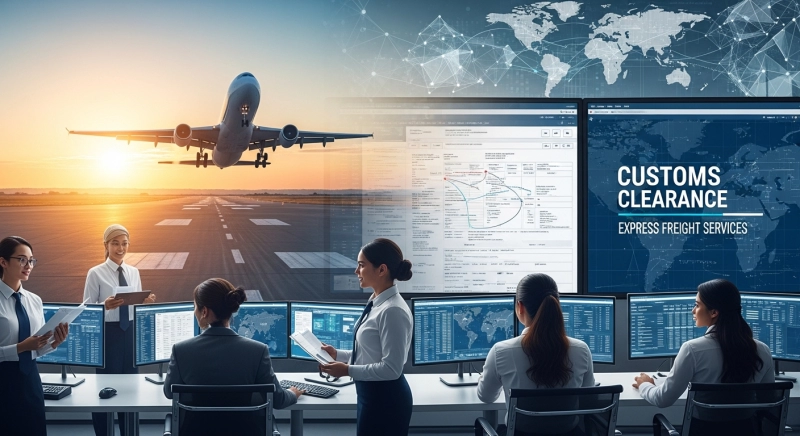
Why Customs Compliance Matters for Importers
International trade offers profitable opportunities, but it also introduces regulatory complexities that many importers overlook. Customs compliance sits at the center of these challenges. It dictates how imported goods are classified, declared, and cleared through ports. When importers comply with customs rules, operations move smoothly and supply chains remain efficient. When they fail to do so, the consequences typically involve penalties, cargo holds, re-export orders, and financial losses.
What is Customs Compliance
Customs compliance refers to adherence to all laws, regulations, tariff classifications, valuation rules, documentation requirements, and procedures governing cross-border cargo. Compliance is not limited to import duties; it includes country-specific regulatory requirements, product standards, restricted cargo policies, safety certifications, and reporting mandates.
In the UAE, GCC, India, Europe, and the United States, customs agencies continue to integrate digital systems that increase transparency and traceability. Such modernization makes compliance more enforceable and less tolerant of documentation discrepancies.
Why Customs Compliance is Critical for Importers, Reduces the Risk of Penalties and Financial Losses
Cargo misdeclaration, incorrect tariff codes, and undervaluation attract fines that erode profit margins. In severe cases, goods may be confiscated or re-exported, leading to direct revenue losses. For example, an importer of automotive parts that misclassifies components to reduce duty may face penalties that exceed the original duty payable.
Ensures Speedy Cargo Clearance
Customs authorities release compliant cargo faster because documentation is consistent, valuation rules match customs expectations, and product classifications align with the Harmonized System. Non-compliant cargo often ends up flagged for inspections, laboratory testing, or manual verification. This delays market entry and disrupts supply chains in industries like retail, electronics, and perishables.
Prevents Supply Chain Disruptions
Manufacturers dependent on imported raw materials or components operate on planned schedules. Compliance minimizes clearance delays and prevents unplanned downtime. If pharmaceutical manufacturers do not receive active ingredients on time due to customs disputes, production halts and market shortages may follow.
Supports Brand Credibility and Market Access
Compliance strengthens importer credibility in regulated industries. Government agencies and logistics partners prefer working with entities that maintain transparent compliance records. Some jurisdictions also restrict market access for companies with repeated compliance violations.
Role of Freight Forwarding Services in Customs Compliance
Freight forwarding services coordinate international cargo movements, but they also offer advisory support to help importers understand customs rules, documentation formats, and clearance procedures. Forwarders review commercial invoices, packing lists, product descriptions, certificates, and regulatory paperwork before cargo departs origin ports.
Express Freight Services supports importers by aligning documentation to customs standards and coordinating with customs clearance companies during the clearance process. This reduces the likelihood of cargo detention and helps importers optimize landed cost structures.
Custom Clearance Agent Responsibilities in Compliance
Custom clearance agents act as compliance intermediaries. Their responsibilities typically include:
Tariff Classification
Assigning correct HS codes to imported products to determine duty rates and eligibility for exemptions.
Valuation and Duty Calculation
Ensuring declared values and Incoterms match customs valuation methodologies.
Document Verification
Checking whether mandatory certificates, permits, and licenses accompany restricted goods.
Regulatory Alignment
Coordinating with ministries, food safety authorities, or standardization agencies for product-specific approvals. Representation and Dispute Resolution Handling queries, audits, and inspections on behalf of importers to maintain compliance continuity.
These responsibilities reinforce why customs clearance companies remain indispensable partners in global logistics ecosystems.
Impact on LCL Consolidation Services
For importers using LCL consolidation services, compliance becomes even more critical. Consolidated cargo contains multiple shippers’ goods within one container. Customs clearance delays for one shipment may delay the entire group. Non-compliance escalates demurrage, storage costs, and re-handling fees at destination ports.
Importers using LCL benefit significantly from accurate declarations, early documentation submission, and partnership with experienced customs clearance companies.
Pros and Cons of Customs Compliance for Importers, Benefits
a) Faster clearance and release of goods
b) Lower risk of penalties and cargo seizures
c) Clear landed cost visibility for pricing and inventory planning
d) Better stakeholder trust from authorities and logistics partners
e) Higher operational predictability for supply chain-dependent industries
Drawbacks of Non-Compliance
1. Higher financial risk through fines, re-exports, and container storage charges
2. Regulatory disputes that damage brand reputation
3. Loss of market share due to delayed product availability
4. Operational bottlenecks in manufacturing and distribution
5. Potential blacklisting by customs authorities in repeated cases
Examples from Real-World Scenarios
An electronics importer shipping high-value laptops fails to declare correct customs valuation. Authorities impose revaluation, penalties, and re-export requirements. Inventory misses seasonal sales windows, resulting in revenue losses.
A compliant textile importer submits certificates of origin and product details before vessel arrival. Customs clears shipments quickly, enabling them to meet distribution timelines for retail rollout.
These contrasting cases demonstrate how compliance impacts both commercial and logistical outcomes.
Conclusion
Customs compliance is not merely regulatory formality but an operational necessity for importers engaged in international trade. The collaboration between freight forwarding services, customs clearance companies, and compliance-focused importers enables seamless clearance, cost efficiency, and market reliability.
Express Freight Services provides end-to-end forwarding, documentation assistance, and customs coordination to ensure importers move cargo without delays and avoid regulatory disputes.
To streamline your import operations, optimize clearance timelines, and improve compliance efficiency, contact Express Freight Services today for expert customs coordination and reliable freight forwarding support.
View More Blogs

How Much Does Air Freight to Rustaq Cost? A Guide for importers and exporters
Air freight to Rustaq costs depend on shipment weight, volume, route origin, and urgency, but most i...
Oman Customs Clearance Through Sohar Port: Documents, Duties and Cargo Release
Customs clearance through Sohar Port runs on Oman’s Bayan electronic platform, where importers sub...
LCL Shipping in Seeb in 2026: What Importers Should Know About Costs, Consolidation and Customs
LCL consolidation in Seeb means sharing a container with other importers so you pay only for the spa...