

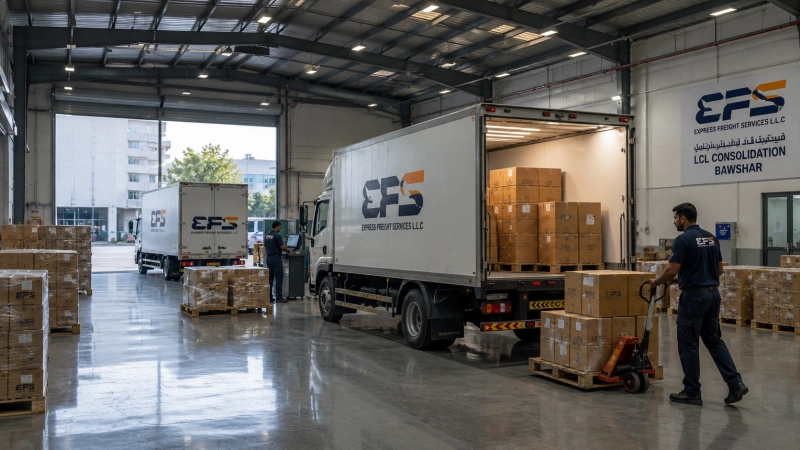
Oman's trade figures from 2025 are worth paying attention to. Non-oil exports climbed 7.5% to RO 6.7 billion, and re-exports shot up by 20.3% in the same year. That kind of momentum does not build itself. There is real logistics muscle holding it up. And if you look at where a lot of that freight activity is concentrated in Muscat, Bawshar keeps coming up.
It is not the flashiest part of the capital but businesses here move a lot of goods. Electronics importers, chemical exporters, trading companies restocking from India every few weeks. The common problem most of them run into? They do not have enough cargo to fill a container. Not even close, sometimes. That is the gap LCL consolidation services in Bawshar fill, and it is a bigger deal for day-to-day trade than people often realise.
What Is LCL Consolidation and Why Does It Matter Here?
LCL means Less than Container Load. Your cargo shares a container with other businesses' shipments that are heading to a similar destination. You pay for the space your goods actually take up, not the whole box.
That part is easy to understand. The harder part is doing it well. Grouping multiple consignments into one container involves scheduling, cargo segregation, labeling, export documentation, port coordination, and making sure nobody else's paperwork problem holds up your delivery. A lot can go sideways if the provider does not have the systems in place.
Bawshar's geography helps here. The district sits close to Muscat International Airport, the access roads leading toward Sultan Qaboos Port, and the expressway network connecting Muscat's main industrial corridors. For a business operating in Bawshar, getting cargo to a consolidation point and then to the port is genuinely easier than it would be from other parts of the city.
The Trade Growth Context, and Where LCL Fits
Oman's Vision 2040 is not just a slogan on a government website. The push toward non-oil economic activity is producing real results in trade. Imports rose 2.7% to RO 17.167 billion in 2025. The UAE is Oman's biggest non-oil export market, with shipments reaching RO 1.31 billion, up 25% from the previous year. India and China together accounted for RO 3.38 billion in imports.
A lot of these are not one-off large shipments from multinationals. A lot of it is smaller companies importing regularly, in volumes that do not fill a container. A plastics manufacturer sending product samples to Riyadh. A retailer pulling in a seasonal order from a European supplier. An SME importing spare parts from Gujarat every six weeks.
LCL consolidation services in Bawshar are part of how these businesses stay in the game without burning through their logistics budget. Without this option, a lot of them would either pay for empty container space or wait until they have enough cargo to justify FCL, and waiting has its own costs.
Three Business Examples Worth Looking At
A Bawshar trading company importing from Mumbai
One mid-sized company brings in consumer electronics and household goods from Nhava Sheva fairly regularly. Their orders run around 5 to 8 CBM each time. A standard 20-foot container has roughly 25 CBM of usable space. Booking a full container would mean paying for 17 CBM of air. With LCL, they pay for what they shipped. The cargo still moves on a scheduled sailing with documentation handled and customs support at the Muscat end. Same destination, fraction of the cost.
A chemical exporter moving small batches to Dubai
An Omani manufacturer sending chemical samples and small-volume orders to Jebel Ali every month does not accumulate enough to fill a container. Through freight forwarding services in Bawshar, their cargo gets consolidated at a Muscat hub and travels to Dubai as part of a larger shared container on a regular schedule. Lower cost per unit, no waiting around for volume to build up.
An e-commerce seller changing how they import from China
A Muscat-based online seller was importing in full containers to get better rates, but the problem was capital. A full container order every few months meant large lump-sum payments and inventory sitting in a warehouse. Switching to LCL imports let them order smaller quantities more often. Working capital freed up, storage costs dropped, and the supply chain became a lot less stressful.
What Makes LCL Consolidation Actually Useful
Here are the things that genuinely matter when businesses choose LCL:
1. Cost control on smaller shipments. Below around 15 CBM, LCL almost always works out cheaper than booking a full container. The savings can be substantial depending on the route.
2. You ship when you need to, not when you can fill a box. Regular weekly consolidation schedules mean cargo moves on a timeline that suits the business, not one dictated by volume minimums.
3. Reach without the overhead. Through a provider like Express Freight Services, LCL shipments from Bawshar connect to major ports across Asia, Europe, East Africa, and the Americas. You get global reach without needing global volumes.
4. Less stock sitting around. Smaller, more frequent shipments reduce the need to hold large inventories. That directly affects storage costs and how much capital is tied up in goods sitting on shelves.
5. Paperwork handled by someone who knows it. Documentation for international LCL shipments is detailed. HS codes, certificates of origin, packing lists, and compliance requirements differ across corridors. Having the freight forwarder manage that takes a real administrative burden off the importer or exporter.
Pros and Cons, Honestly
LCL is not the right choice for every shipment. Here is a straightforward breakdown:
Where LCL works well
- Lower cost for shipments under around 15 CBM
- No minimum volume requirements
- Regular scheduled sailings make planning easier
- Documentation and customs support included with a good provider
- Good fit for businesses entering a new market with small test orders
Where it gets tricky
- Transit times can be a day or two longer than FCL because of the consolidation and deconsolidation process at each end
- If another consignment in the same container has a documentation problem, yours can get caught in the delay too, even if everything on your end is correct
- Once cargo volume crosses roughly 15 to 18 CBM consistently, FCL pricing becomes competitive and sometimes cheaper
- Packaging matters more in LCL. Your cargo shares space, and it needs to be properly packed to avoid damage
Figuring out which option is right for a given shipment is something a freight forwarder can help with based on your actual cargo size, frequency, and destinations.
Customs Clearance Is Not an Afterthought
This part gets underestimated a lot. When an LCL container arrives at Muscat, whether from Jebel Ali or directly from an origin port, every consignment inside it needs to clear customs correctly. And because multiple importers are sharing that box, a documentation issue with one party can create knock-on delays for others.
Wrong HS code, missing certificate of origin, incomplete packing list. These are common errors and they cause real delays at the port. Working with a team that also handles customs clearance services in Bawshar alongside the LCL consolidation means the documentation and the freight move through the same hands. There is no gap between the logistics team and the clearance team because they are the same team.
At Express Freight Services, clearance and consolidation are handled together. That alone saves a lot of back-and-forth when something needs to be sorted quickly.
Why Bawshar in Particular
Bawshar has changed considerably over the past decade. What was primarily a residential district has built up a solid commercial and light-industrial base. Trading companies, distributors, FMCG businesses, electronics suppliers, and construction material importers have all set up operations here.
For this kind of business mix, LCL is often the most practical shipping format. Shipments come in regularly but not in container-filling volumes. When a sailing schedule shifts or a supplier delays, you need a freight partner who can respond without a long chain of escalations. Being in Bawshar, with direct access to the expressway and proximity to the port corridor, makes that logistics coordination faster than it would be from more central parts of Muscat.
About Express Freight Services LLC
Express Freight Services has been in Oman's logistics sector since 1995. That is not just a number on a website. It means the team has handled the Muscat to Jebel Ali corridor through multiple shipping market cycles, has relationships with carriers that newer players are still building, and knows Omani customs requirements in the kind of detail that only comes from years of daily clearance work.
Among Oman freight forwarding companies, EFS stands out for handling LCL consolidation, customs clearance, warehousing, and NVOCC services under one operation. That matters when your logistics needs grow. You are not being handed off to a different provider every time you need something beyond basic freight.
Express Freight Oman works across key trade corridors, Muscat to Jebel Ali, Nhava Sheva imports, outbound consolidations to global ports, and understands what Omani customs and destination port authorities expect in terms of documentation format and compliance. That familiarity shortens the problem-solving time significantly when things do not go to plan.
The Bigger Picture
Oman hit RO 40.4 billion in total foreign trade in 2025. Re-exports alone grew 20% in a single year. The government is investing in ports, free zones, and logistics infrastructure with the explicit goal of making Oman a regional trade hub, not just an oil exporter.
For businesses in Bawshar and across Muscat, getting a piece of that growth means having logistics that work at their scale. Full-container economics work for large corporations. Most local SMEs and trading businesses need something more flexible. The cargo services in Oman through Express Freight Services are built for exactly that, regular shipping without overpaying for space you do not need.
Get a Quote From Express Freight Services
FAQs
1. Is there a minimum shipment size for LCL?
No strict minimum. A few cartons or a single pallet can move via LCL. Very small shipments might work better through air freight if the goods are time-sensitive or high-value, but for most cargo, LCL handles it.
2. How long does Bawshar to Jebel Ali take via sea?
The ocean leg typically runs 2 to 4 days. Add consolidation time at the origin and deconsolidation at the destination and the door-to-door estimate will be longer. A freight forwarder gives you the realistic timeline based on current sailing schedules.
3. Can I track an LCL shipment?
Yes. Express Freight Services provides tracking and updates through the consolidation, ocean, and delivery stages.
4. What about hazardous cargo?
Some hazardous materials can move via LCL under the right conditions and with the proper documentation. It is worth discussing specifics with your freight forwarder before booking rather than assuming.
5. LCL or FCL, how do I decide?
A rough starting point: under 15 CBM, LCL is usually the better value. Over 15 to 18 CBM, compare both. If you are shipping frequently, the scheduling flexibility of LCL sometimes makes it worth it even when the per-CBM cost is similar.
View More Blogs
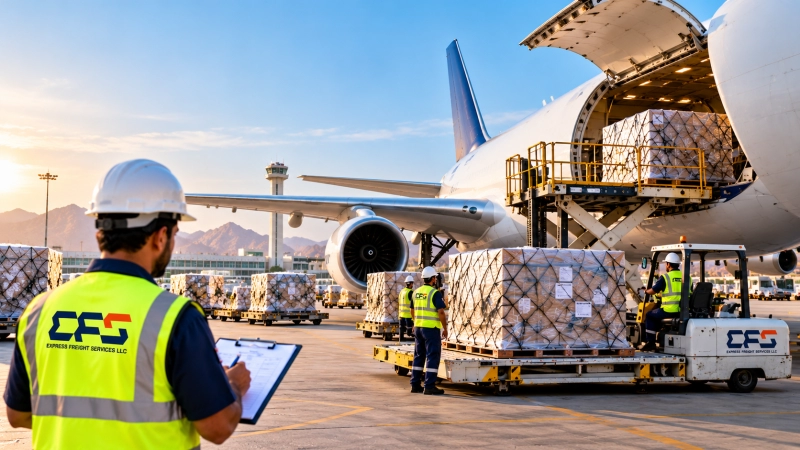

How Much Does Air Freight to Rustaq Cost? A Guide for importers and exporters
Air freight to Rustaq costs depend on shipment weight, volume, route origin, and urgency, but most i...
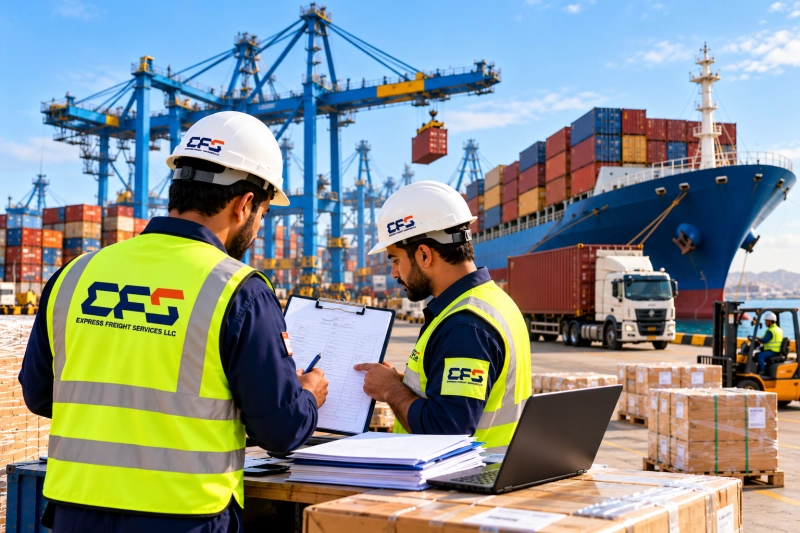
Oman Customs Clearance Through Sohar Port: Documents, Duties and Cargo Release
Customs clearance through Sohar Port runs on Oman’s Bayan electronic platform, where importers sub...
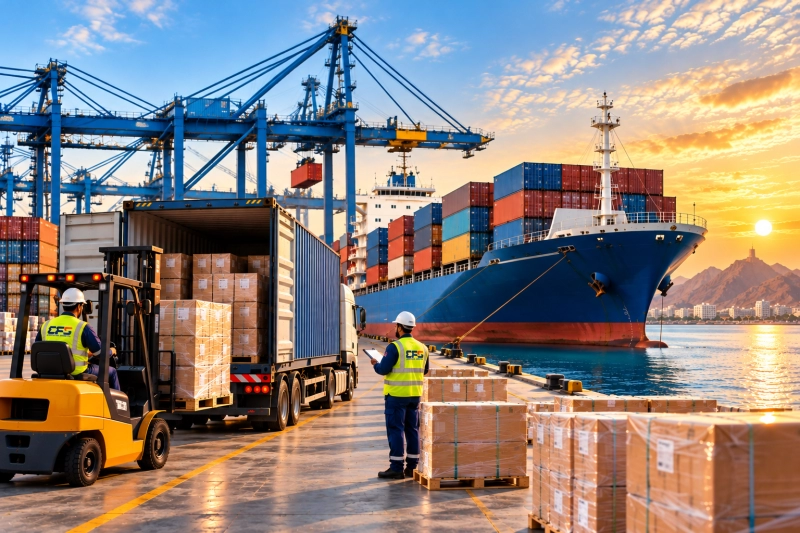
LCL Shipping in Seeb in 2026: What Importers Should Know About Costs, Consolidation and Customs
LCL consolidation in Seeb means sharing a container with other importers so you pay only for the spa...