

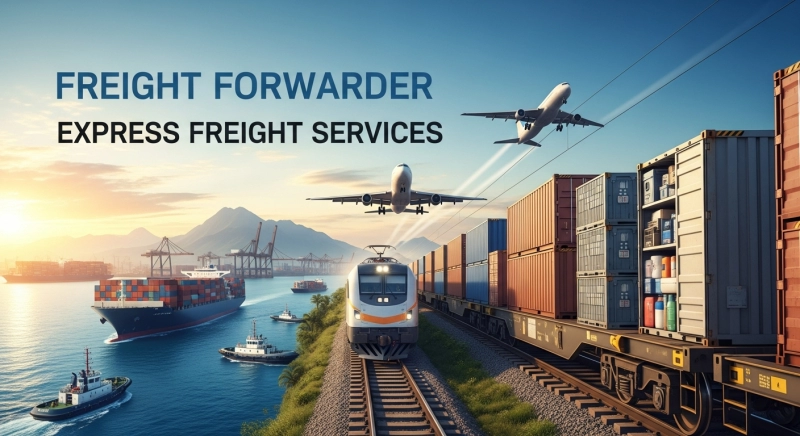
If you’ve ever tried shipping something across borders, you already know it’s not as simple as “put it on a plane and hope for the best.” There’s paperwork everywhere, different carriers to deal with, customs rules that change depending on where you’re shipping, and honestly a hundred tiny things that can mess everything up if someone misses one detail. That’s pretty much why freight forwarders exist.
A good forwarder quietly deals with all the messy bits in the background so your shipment doesn’t get stuck at some random port. They figure out the route, talk to the carriers, juggle the documents, and send updates so you’re not constantly chasing people for answers. For a lot of companies, they’re the people who make global trade feel less like chaos.
This guide pretty much walks you through what freight forwarders really do behind the scenes, how they keep things moving without everything falling apart, and why so many businesses end up relying on experienced teams like Express Freight Services to take over the whole process from the first step to the last.
What Is a Freight Forwarder?
Think of a freight forwarder as the person who orchestrates your entire shipping journey. They don’t own the vessel or the aircraft or even the truck most of the time. But they know exactly which carrier to call, which port needs what paperwork, and how to get your cargo from point A to B without it being delayed for something silly.
They’re basically your logistics translator someone who understands customs rules, knows which routes make sense, and handles all the formalities that would probably swallow your whole day if you tried to manage them yourself. Whether you’re shipping one pallet or a full container, they make sure the plan makes sense and the shipment doesn’t wander off-track.
For most businesses, using a freight forwarder stops being a “nice idea” and turns into “honestly, how do we ship without one?” Express Freight Services fills this exact role by stepping in at every stage, so you’re not stuck figuring out international logistics alone.
Core Responsibilities of a Freight Forwarder
A freight forwarder does way more than just book transport. Their job stretches across the whole timeline of your shipment. The moment you share your cargo details, they start piecing together a plan ideally one that is practical, cost-effective and won’t cause any headaches later.
They’re constantly coordinating with shipping lines, airlines, truckers and customs teams while also keeping the paperwork clean. One mistake in a document can delay an entire shipment, so preventing problems is a huge part of their job. They also stay updated on duty rules, port changes and other regulations so your cargo stays compliant the whole way.
In short, they’re the ones figuring out the routes, sorting out all the paperwork, dealing with customs, arranging LCL or FCL loads, coordinating with people on both sides of the shipment, and basically keeping you in the loop until your stuff finally reaches where it’s supposed to go. Most of it happens quietly in the background almost invisible until something goes wrong, and then suddenly you realise how much they were actually holding together.
How the Freight Forwarding Process Works (Step-by-Step)
The whole forwarding process might look like a maze from the outside, but it’s not total chaos. Most shipments follow a pretty standard flow, give or take a few curveballs, and the forwarder basically lines everything up so your cargo doesn’t end up stuck somewhere in the middle.
It starts with planning. The forwarder checks your shipment details, destination rules and decides the best route and mode of transport. After that comes documentation commercial invoices, packing lists, Bills of Lading, special certificates the whole bundle.
Next, they book space with the shipping line, airline or trucking partner. They check rates, schedules and choose whatever works best for your timeline. Closer to the shipping date, they arrange pickup or receive the cargo for consolidation or packing.
Then comes customs clearance, which is where a lot of people panic but a good forwarder handles declarations, duties, inspections and makes sure the shipment is cleared without drama. After that, the shipment moves through its transit legs while the forwarder keeps track of everything and gives you updates until it reaches the final point.
The process may look long on paper, but a skilled forwarder keeps it flowing without you needing to get involved in every small detail.
Why Businesses Prefer Using Freight Forwarding Companies
Most businesses realise fairly early that handling international shipping alone can get overwhelming really fast. There are too many rules, too many moving pieces, and too many things that can go wrong. So instead of stressing over all that, they hand it over to a freight forwarder.
Forwarders have experience real, hands-on experience from dealing with different ports, changing carrier schedules, customs surprises and so on. They know the shortcuts, the common mistakes to avoid and the routes that save time or money.
Plus, a good forwarder can often negotiate better rates or find more efficient ways to pack and ship your goods. Smaller shipments, for example, become much cheaper with LCL options that forwarders organise. And honestly, a single person handling updates, coordination and troubleshooting is a relief compared to juggling multiple contacts.
When Should You Hire a Freight Forwarder?
You don’t always have to bring in a freight forwarder tiny shipments or something local can usually manage fine on their own. But the moment you step into international shipping, or you’ve got multiple carriers, ports, or moving parts in the mix, it stops being simple real fast. At that point, having a forwarder is pretty much the only way to keep everything from going off the rails.
If you’re unsure about customs rules, or you’re worried about delays caused by incorrect paperwork, a forwarder is the safest option. They also help when you’re trying to optimise costs. For example, if your shipment isn’t big enough for a full container, LCL consolidation ends up saving money, and a forwarder arranges that without you needing to coordinate with multiple parties.
Basically, whenever you want fewer surprises, less stress and someone else handling the logistics puzzle, it’s worth bringing a freight forwarder onboard.
Freight Forwarder vs Customs Clearance Agent – What’s the Difference?
People mix these two roles up all the time, but they do very different things.
A freight forwarder manages your entire shipping process planning, booking, routing, handling documents, coordinating with carriers and keeping things moving.
A customs clearance agent, on the other hand, focuses only on the legal and regulatory side. Their job is declarations, duties, compliance documents, inspections and making sure your shipment is allowed through the border.
So, the forwarder handles logistics; the customs agent handles compliance. Many shipments need both. Some companies, like Express Freight Services, actually handle both sides, which is convenient if you’d rather not work with five different service providers for one shipment.
How Express Freight Services Makes Freight Forwarding Easier
Working with a freight forwarder should feel like giving your logistics worries to someone who actually knows how to handle them. That’s the experience Express Freight Services aims for.
They plan each shipment based on your timeline, budget and cargo type. Whether you’re shipping something small that needs LCL or a full container, the routing and scheduling are designed to avoid delays. All the documentation and compliance checks are done early so you’re not facing unpleasant surprises at customs later.
Customs coordination is one of their strong points. They prepare declarations, manage inspections and handle duty calculations so your cargo doesn’t get stuck. Clients also get regular updates, which honestly reduces half the stress of shipping internationally.
With real experience across different trade routes, Express Freight Services makes the whole process more predictable and far less exhausting for businesses.
Shipping goods across borders can feel complicated, but a good freight forwarder makes everything much more manageable. From planning and documentation to customs coordination and tracking, a forwarder quietly keeps your shipments on schedule and helps avoid delays and unnecessary costs.
Express Freight Services follows this exact approach handling every stage of the shipment with practical experience and clear communication. Whether it’s LCL, a full container or something that needs careful customs attention, their goal stays the same: keep the process smooth and predictable. For any business that wants fewer logistics headaches, having the right freight forwarding partner can make all the difference.
View More Blogs

India to GCC Shipping Through Sohar Port: A Guide for Businesses
India to GCC shipping has matured into one of the most dependable trade corridors in the Indian Ocea...
Land, Sea and Air Transport in Duqm: A Complete Guide for Businesses
Duqm’s transport network has grown into one of Oman’s most strategically important logistics cor...
How Much Does It Cost for Air Cargo Service in Bidiyah: A Complete Guide by Express Freight Services LLC
Air cargo is the backbone of fast international trade, but for businesses in Bidiyah, the cost quest...