

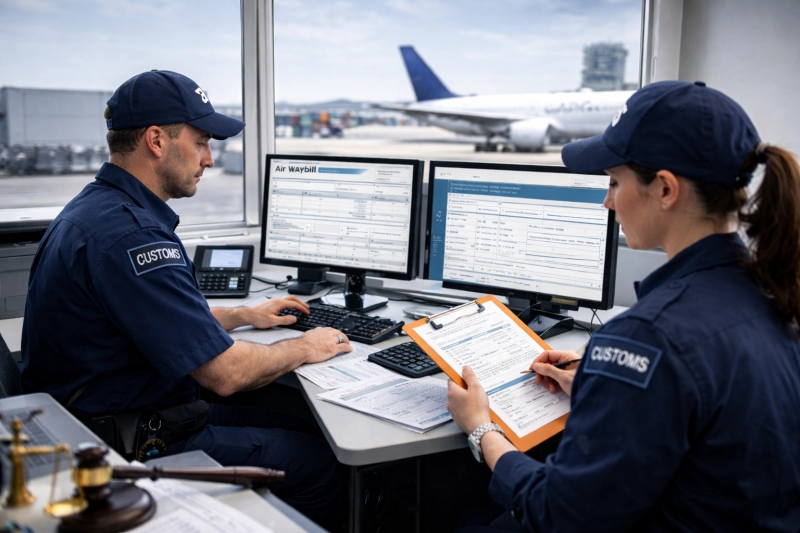
Air Freight Customs Clearance is the legal process of declaring imported goods to customs authorities, paying applicable duties and taxes, and obtaining approval for cargo release at the airport. Without proper clearance, shipments are delayed, penalized, or even seized. For importers, understanding this process is essential to avoid costly disruptions.
Air cargo moves fast. But customs procedures do not automatically move at the same speed. That is why working with experienced customs clearance services becomes critical.
Why Is Air Freight Customs Clearance Important?
When goods arrive by air, they must comply with local regulations before entering the market. Customs authorities verify:
- Correct product classification
- Declared value accuracy
- Duty and tax calculation
- Compliance with import regulations
- Restricted or prohibited items
If documentation is incorrect, shipments are held. For time-sensitive cargo such as electronics, medical supplies, or fashion goods, delays directly affect revenue.
Professional customs clearance companies help importers reduce these risks.
How Does the Air Freight Customs Clearance Process Work?
1. Document Preparation
Importers must submit:
- Commercial invoice
- Packing list
- Airway bill
- Import license if required
- Certificate of origin
Accurate documentation is the foundation of smooth Air Freight Customs Clearance.
2. Customs Declaration Filing
A customs clearance agent files the declaration electronically with customs authorities. Product codes, values, and shipment details must be precise.
3. Duty and Tax Assessment
Customs calculates duties, VAT, or other applicable charges based on product classification and declared value.
4. Inspection if Required
Some shipments are selected for physical inspection or document verification.
5. Cargo Release
Once approved and payments are settled, cargo is released for delivery.
What Are the Responsibilities of a Customs Clearance Agent?
Many importers assume customs clearance is simply paperwork. In reality, customs clearance agent responsibilities are broader and require expertise.
A professional agent:
- Classifies goods under the correct HS codes
- Calculates duties accurately
- Ensures regulatory compliance
- Coordinates inspections
- Communicates with customs authorities
- Resolves disputes or queries
Errors in classification or valuation can result in penalties. That is why choosing the right customs clearance services partner matters.
Benefits of Professional Air Freight Customs Clearance Services
Faster Processing
Experienced customs clearance companies understand procedures and reduce avoidable delays.
Reduced Risk of Penalties
Incorrect declarations can lead to fines. Experts ensure compliance with updated regulations.
Cost Transparency
A reliable provider explains duty structures, service charges, and handling fees upfront.
Time Savings
Importers can focus on business operations while professionals manage clearance formalities.
Better Problem Resolution
If customs raises queries, an experienced team responds quickly with proper documentation.
Pros and Cons of Air Freight Customs Clearance
Pros
- Faster transit compared to sea freight
- Ideal for urgent or high-value goods
- Lower inventory holding time
- Reduced warehousing costs
Cons
- Higher freight costs compared to sea shipping
- Strict documentation requirements
- Possible inspections causing delays
- Understanding both sides helps importers plan better.
Common Challenges Importers Face
Incorrect Documentation
Even small errors in invoices or product descriptions can cause shipment holds.
Misclassification of Goods
Wrong HS codes result in incorrect duty assessment or compliance violations.
Unexpected Duty Costs
Importers sometimes underestimate taxes, affecting cash flow.
Regulatory Changes
Customs laws can change. Staying up to date is difficult without expert support.
Professional customs clearance services significantly reduce these risks.
Real World Example
A consumer electronics importer brought high-value components via air to meet urgent production deadlines. Due to incorrect product classification by an inexperienced broker, customs reassessed duties and held the shipment.
After switching to Express Freight Services, the importer received proper HS classification guidance and pre-shipment documentation review. Subsequent Air Freight Customs Clearance was completed without delays, and production schedules stabilized.
Another example involves a fashion retailer importing seasonal goods. Tight timelines meant any delay would result in missed sales windows. With structured support from a reliable customs clearance company, documentation was pre-checked, and shipments cleared within expected timelines.
How to Choose the Right Customs Clearance Company
When evaluating customs clearance companies, consider:
- Experience in handling your product category
- Clear explanation of custom clearance agent's responsibilities
- Strong communication process
- Transparent pricing structure
- Knowledge of local customs regulations
- Ability to manage urgent air cargo
Avoid selecting purely based on low fees. In customs processes, expertise saves more money than discounts.
Why Importers Trust Express Freight Services
Express Freight Services understands that Air Freight Customs Clearance is not just a procedural step. It directly affects delivery timelines, compliance, and profitability.
Their team:
- Reviews documentation before shipment arrival
- Ensures correct classification and valuation
- Coordinates directly with airport customs authorities
- Provides consistent updates
- Resolves queries quickly
By combining freight forwarding expertise with reliable customs clearance services, they simplify what often feels complex for importers.
Final Thoughts
Air Freight Customs Clearance is a critical stage in the import process. It ensures legal compliance, proper duty payment, and timely cargo release. Without proper expertise, even fast air shipments can become delayed and expensive.
Working with experienced customs clearance companies reduces risk, improves efficiency, and protects business continuity. Understanding custom clearance agent responsibilities helps importers appreciate the value of professional support.
If your business depends on reliable air imports, expert guidance is not optional. It is essential.
View More Blogs

How Much Does Air Freight to Rustaq Cost? A Guide for importers and exporters
Air freight to Rustaq costs depend on shipment weight, volume, route origin, and urgency, but most i...
Oman Customs Clearance Through Sohar Port: Documents, Duties and Cargo Release
Customs clearance through Sohar Port runs on Oman’s Bayan electronic platform, where importers sub...
LCL Shipping in Seeb in 2026: What Importers Should Know About Costs, Consolidation and Customs
LCL consolidation in Seeb means sharing a container with other importers so you pay only for the spa...