

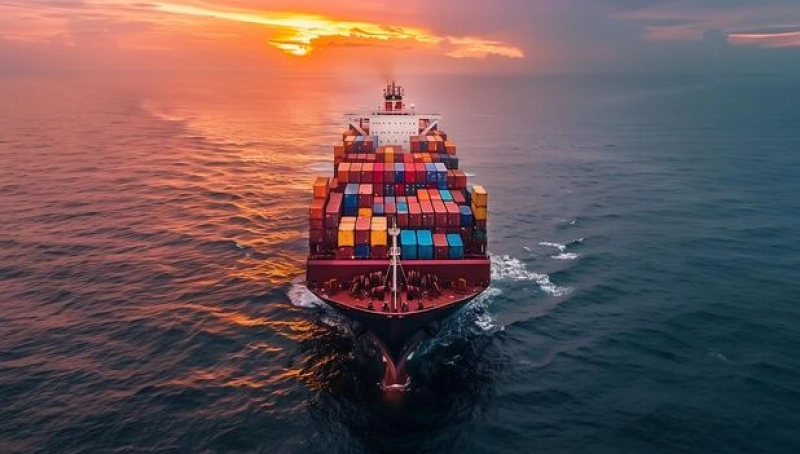
Sea freight supports global trade by enabling the large-scale, cost-effective movement of goods across international markets. Through freight forwarding services, LCL consolidation services, and customs clearance services, businesses can transport products efficiently while maintaining compliance and supply chain stability.
More than eighty percent of global trade by volume moves by sea. From raw materials to finished goods, ocean shipping connects manufacturers, suppliers, and consumers worldwide. Without sea freight, modern global commerce would not function at its current scale.
Why Sea Freight Is the Backbone of International Trade
Sea freight allows countries to exchange goods in bulk at lower costs compared to air transport. Large container vessels can carry thousands of containers in a single voyage, making it ideal for high-volume trade.
Industries that depend heavily on sea freight include:
- Manufacturing
- Automotive
- Retail and e-commerce
- Construction materials
- Oil and energy
Freight forwarding services coordinate these shipments, manage routes, and ensure timely cargo movement across continents.
How Freight Forwarding Services Enable Sea Trade
Freight forwarding services play a central role in managing sea freight operations. They act as logistics partners who organize transportation, documentation, and coordination between shipping lines and importers.
Route Planning and Carrier Selection
Freight forwarders analyze shipping schedules, transit times, and port connectivity to choose the most efficient route. This ensures businesses avoid unnecessary delays and reduce transit costs.
Documentation Management
International sea shipments require accurate documentation, including:
- Bill of Lading
- Commercial Invoice
- Packing List
- Certificates and permits
Freight forwarding services ensure all documents meet regulatory requirements before cargo arrival.
Coordination with Customs Clearance Services
Sea freight shipments must pass customs checks before release. Customs clearance services ensure compliance with import regulations, duty calculation, and inspection procedures. This integration prevents cargo from getting stuck at the port.
The Role of LCL Consolidation Services in Global Trade
Not every business ships full container loads. LCL consolidation services allow multiple shippers to share container space, reducing shipping costs for smaller consignments.
Cost Efficiency for Small and Medium Businesses
A startup importing small volumes does not need to pay for an entire container. LCL consolidation services combine shipments from multiple clients, spreading container costs across users.
Example
A furniture importer shipping ten cubic meters of goods can use LCL instead of booking a full container, significantly lowering freight expenses.
Improved Inventory Planning
Businesses can ship smaller volumes more frequently instead of waiting to fill an entire container. This supports better inventory control and reduces storage costs.
Market Expansion Opportunities
LCL consolidation services make international trade accessible to small and medium enterprises that may not have large shipment volumes.
How Customs Clearance Services Keep Sea Freight Moving
Customs clearance services are critical in ensuring that sea freight shipments are legally approved for import or export.
Accurate Duty and Tax Calculation
Incorrect valuation or HS code classification can delay cargo release. Customs professionals ensure proper declarations to avoid penalties.
Regulatory Compliance
Different countries have specific import rules. Customs clearance services ensure goods comply with local regulations, certifications, and standards.
Faster Port Release
Efficient customs handling reduces port storage charges and demurrage costs, keeping supply chains on schedule.
Benefits of Sea Freight for Global Trade
Sea freight offers several strategic advantages:
- Lower cost per unit compared to air freight
- Capacity for heavy and oversized cargo
- Reliable international shipping networks
- Flexible options through LCL consolidation services
- Integrated support from freight forwarding services
These benefits make sea freight the preferred mode for bulk international shipments.
Pros and Cons of Sea Freight
Pros
- Cost-effective for large shipments
- Suitable for bulky and heavy goods
- Environmentally efficient per ton transported
- Wide global connectivity
Cons
- Longer transit times compared to air freight
- Port congestion risks
- Weather-related disruptions
- Dependency on documentation accuracy
While sea freight may not be the fastest option, freight forwarding services and customs clearance services help mitigate delays and ensure predictable delivery schedules.
Real World Example of Sea Freight Supporting Trade
Consider a manufacturer exporting machinery to multiple countries. By using freight forwarding services, they plan optimal sea routes. Through LCL consolidation services, they ship spare parts separately without booking full containers. With professional customs clearance services, goods clear ports efficiently.
This coordinated process enables smooth international distribution and strengthens global supply chains.
Why Businesses Choose Express Freight Services
Express Freight Services delivers integrated freight forwarding services, LCL consolidation services, and customs clearance services tailored to support global trade operations.
Our team manages documentation, carrier coordination, consolidation planning, and regulatory compliance to ensure efficient sea freight movement. Whether you ship full containers or small consignments, we simplify international logistics.
Conclusion
Sea freight supports global trade by offering scalable, cost-effective transportation across international markets. With the support of freight forwarding services, LCL consolidation services, and customs clearance services, businesses can manage risk, control costs, and maintain reliable supply chains.
From small businesses using shared containers to large exporters moving bulk cargo, sea freight remains the foundation of international commerce.
View More Blogs

How Much Does Air Freight to Rustaq Cost? A Guide for importers and exporters
Air freight to Rustaq costs depend on shipment weight, volume, route origin, and urgency, but most i...
Oman Customs Clearance Through Sohar Port: Documents, Duties and Cargo Release
Customs clearance through Sohar Port runs on Oman’s Bayan electronic platform, where importers sub...
LCL Shipping in Seeb in 2026: What Importers Should Know About Costs, Consolidation and Customs
LCL consolidation in Seeb means sharing a container with other importers so you pay only for the spa...