

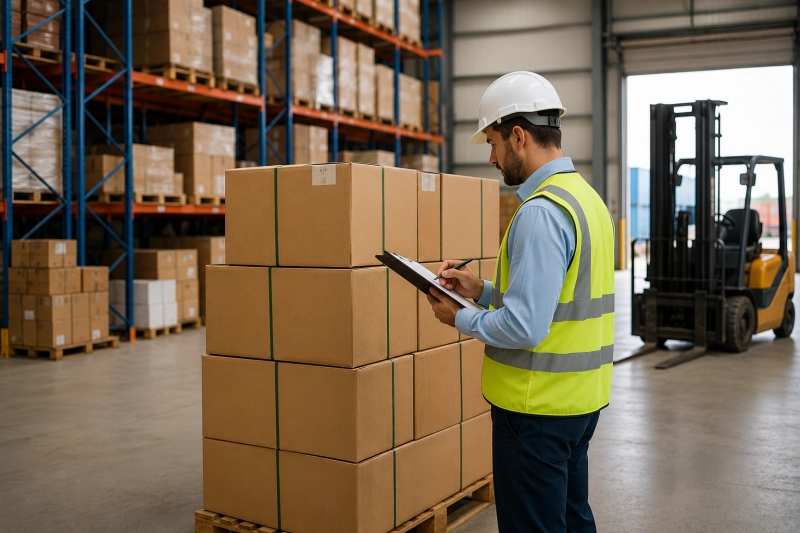
Cross-border trade sounds straightforward until you are actually doing it. The paperwork alone can take over, and that is before you factor in customs delays, carrier schedules and the occasional regulation that nobody told you had changed. If you run a business in Oman and you move goods in or out of the country, you have probably already run into at least one of these headaches. At Express Freight Services LLC, this is the kind of thing we deal with day to day for clients across the Sultanate, so we thought it was worth putting together something practical.
This guide covers what import and export logistics actually means, how it works here in Oman, what the real benefits are and where things tend to go wrong. No fluff, just what you actually need to know.
What Is Import and Export Logistics?
Simply put, import and export logistics is the full process of getting goods from one country to another. That includes planning the route, booking the freight, handling the paperwork, clearing customs and making sure the cargo actually ends up where it needs to go.
When an Omani business brings in steel from China or ships dates to European supermarkets, everything that happens between the factory door and the final delivery point falls under this umbrella. It is not just about the shipping. Documentation, customs clearance, cargo handling, warehousing, insurance, last-mile delivery, all of it is part of the picture. Miss one piece and the whole thing can stall.
Core Components of Import and Export Logistics
• Freight forwarding by air or sea
• Customs documentation and tariff classification
• Cargo consolidation and deconsolidation
• Warehousing and distribution
• Insurance and risk management
• Inland transportation and last-mile delivery
How Import and Export Logistics Works in Oman
Oman's geography works in its favour here. Sitting between Asia, Africa and Europe, with ports at Salalah, Sohar and Muscat plus a growing air cargo operation at Muscat International Airport, the country is genuinely well set up for international trade. The infrastructure is there. The question is knowing how to use it properly.
Here is roughly how the process plays out for a typical Omani business:
Step-by-Step Process
1. Cargo booking: Your freight forwarder finds and secures space on the right vessel or flight, based on what you are shipping and when it needs to arrive.
2. Documentation: This is where a lot of shipments run into trouble. Commercial invoice, packing list, bill of lading or airway bill, certificate of origin, any special permits. All of it needs to be accurate.
3. Export clearance: Before the cargo leaves the origin country, customs there has to inspect and release it.
4. Transit and tracking: The shipment moves, ideally with real-time visibility so you are not just waiting and hoping.
5. Import clearance in Oman: Goods arriving at a port or airport here go through the local customs process before anyone can touch them.
6. Warehousing and delivery: Once cleared, cargo goes into storage or straight to the buyer, depending on what was agreed.
If your volumes are on the smaller side and you are not filling a full container, LCL Consolidation Services let you share container space with other shippers. It keeps costs down without making you compromise on the service side.
Benefits of Getting Import and Export Logistics Right
There is a tendency to think of logistics as just a back-office function, something that runs quietly in the background. But the businesses that treat it seriously tend to see real advantages over the ones that just wing it.
1. Access to Global Markets: Good logistics infrastructure means you can actually reach the suppliers and buyers you want to work with, not just the ones that are easiest to deal with. Sourcing raw materials from Southeast Asia or getting Omani products onto shelves in European markets becomes a lot more realistic when the supply chain is properly set up.
2. Cost Control Through Better Planning: Last-minute freight bookings are expensive. Demurrage charges are expensive. Penalty fees for late or incorrect documentation are expensive. Businesses that plan their logistics properly avoid most of these, which means the cost of moving goods becomes something you can actually budget for rather than constantly scramble to cover.
3. Faster Delivery Timelines: When the customs clearance runs smoothly and the route is pre-planned, transit times shrink. For anything time-sensitive, perishables, electronics, seasonal goods, that difference can genuinely matter.
4. Regulatory Compliance: Import duties, export restrictions, product certifications, bilateral trade rules. The list of things you can accidentally get wrong is long, and the penalties for getting them wrong are real. Having professionals managing this keeps you on the right side of the rules without you having to become an expert in every regulation yourself.
5. Reduced Risk: Cargo loss, damage, disputes with carriers, shipments stuck at customs. These things happen less often when documentation is clean, cargo is properly insured and someone experienced is handling the process. Working through established cargo services in Oman that know the local system makes a noticeable difference.
Pros and Cons of Import and Export Logistics
It is worth being honest about this. International logistics is genuinely useful and genuinely complicated. Both things are true at the same time.
The Pros
• Wider supplier base: You are not locked into local suppliers, which usually means better prices and more options.
• Revenue growth through exports: There is international demand for Omani goods, especially in food, chemicals and manufactured products. Logistics is the piece that lets you actually reach those markets.
• Economies of scale: Once you are moving goods regularly through established trade lanes, the per-unit cost of shipping tends to drop.
• Trade agreement advantages: Oman's CEPA with India is a good example. Knowing which agreements apply to your goods can meaningfully reduce what you pay in duties.
• Supply chain resilience: Relying on a single country for everything is a vulnerability. Spreading your sourcing across different origins gives you options when things go sideways somewhere.
The Cons
• Complexity: Multiple parties, multiple countries, multiple regulations. There are a lot of moving parts, and coordination failures happen.
• Regulatory burden: Trade rules change. Tariff codes get updated. New certifications get required. Keeping up with all of it is a real job.
• Cost unpredictability: Freight rates swing with fuel prices and market demand. Exchange rates shift. What you budgeted three months ago may not match what you actually pay.
• Lead time uncertainty: Port congestion, weather, customs delays. Even a well-planned shipment can get held up for reasons outside anyone's control.
• Documentation errors: One wrong HS code or a missing signature can hold your cargo for days. It is a small thing with a big consequence.
This is a big part of why most established Omani importers and exporters work through professional Freight Forwarding Services rather than trying to run everything themselves. The complexity is real and it compounds quickly.
Real-World Examples of Import and Export Logistics in Oman
Theory is useful. But sometimes it helps to just see what this actually looks like for a real business.
Example 1: Importing Building Materials from China
A construction company in Muscat is sourcing tiles, steel fittings and structural materials from manufacturers in Guangzhou. They do not have enough volume for a full container, so the freight forwarder puts together an LCL booking, consolidating their cargo with other shippers. It moves out of China, arrives at Sohar port, clears customs in Oman and gets delivered to the site warehouse. Transit time usually runs somewhere between 22 and 28 days depending on the schedule.
Example 2: Exporting Dates from Oman to the UAE and Beyond
An agribusiness in Oman exports dates to the UAE, Kuwait and a few European buyers every harvest season. For the premium-grade product, refrigerated air cargo is the only option. For bulk orders going by sea, standard reefer containers work. Either way, the paperwork, certificates of origin, phytosanitary certificates, destination-specific labelling requirements, all of it gets handled by the logistics partner so the producer can focus on the actual harvest.
Example 3: Re-exporting Goods Through Oman
Oman's free zones have made the country an attractive re-export hub, particularly for trade moving toward East Africa and South Asia. A trading company brings goods in from Asia, holds them in a bonded warehouse and then re-exports once the orders come in. Done properly, with solid Customs Clearance Services, the goods move through without triggering unnecessary duty costs at either end.
Common Challenges Businesses Face with Import and Export Logistics
Most of the problems we see come up again and again. Knowing what they are is half the battle.
Incomplete or Incorrect Documentation
Wrong HS codes, missing signatures, cargo descriptions that do not match the actual contents. These are the most common reasons shipments get held at customs, and they are almost always preventable. Getting the paperwork right upfront is not optional, it is the difference between a smooth clearance and a week-long delay.
Poor Freight Partner Selection
Some businesses pick their freight provider based on whoever quoted the lowest price. That works fine until something goes wrong, and then they find out the hard way that cheap does not always mean capable. Tracking, communication, liability coverage, these things vary a lot between providers.
Lack of Visibility Over Shipments
If you do not know where your cargo is, you cannot plan around it. Customers ask questions you cannot answer. Warehouse staff are standing by for a delivery that shows up two days late. Real-time tracking tools exist and they work well, but only if your logistics partner actually has them in place and shares updates proactively.
Underestimating Lead Times
This one catches new importers out a lot. The shipping time is just one part of the journey. Add customs clearance, port handling, inland transport and you can easily add several days to whatever the carrier's schedule says. Building that buffer into your procurement planning saves a lot of stress.
Work with a Freight Partner Who Knows Oman Inside Out
Import and export logistics is not something you figure out once and it stays figured out. Trade rules shift, shipping markets move, new routes open up and old ones get more congested. What works this year might need adjusting next year.
What helps is having a partner who is already across all of that. Express Freight Services LLC has been handling international freight for businesses in Oman for years, across air, sea, customs clearance, warehousing and everything in between. Whether you are importing for the first time or you are an established exporter who has outgrown your current setup, we can put something together that actually fits what you need.
Reach out to our team and let us take a look at what you are working with.
Frequently Asked Questions About Import and Export Logistics in Oman
1. What documents are required for importing goods into Oman?
The core set is commercial invoice, packing list, bill of lading or airway bill, certificate of origin and a customs declaration. On top of that, certain product categories need additional paperwork. Food imports may need health certificates. Some goods require SFDA approvals or municipality clearances. It depends on what you are bringing in.
2. How long does customs clearance take in Oman?
For a standard shipment with clean documentation, clearance at Muscat or Sohar usually runs one to three working days. Shipments that get flagged for physical inspection, or anything involving controlled goods, will take longer. Having your paperwork in order before the cargo arrives makes a real difference.
3. What is the difference between LCL and FCL shipping?
LCL means your cargo shares a container with other shippers. You pay for the space your goods actually take up. FCL means you are booking the whole container yourself. LCL works well for smaller, regular shipments where you do not want to wait until you have enough volume to fill a box. FCL is better for larger volumes and tends to move faster because there is no consolidation or deconsolidation step involved.
4. Does Oman have any trade agreements that affect import duties?
Yes, a few worth knowing about. As a GCC member, Oman benefits from preferential trade terms with other Gulf states. The CEPA agreement with India is the more recent one and it reduces duties on a range of goods moving between the two countries. Whether these apply to your specific products depends on the HS code classification, so it is worth checking before you assume.
View More Blogs

How Much Does Air Freight to Rustaq Cost? A Guide for importers and exporters
Air freight to Rustaq costs depend on shipment weight, volume, route origin, and urgency, but most i...
Oman Customs Clearance Through Sohar Port: Documents, Duties and Cargo Release
Customs clearance through Sohar Port runs on Oman’s Bayan electronic platform, where importers sub...
LCL Shipping in Seeb in 2026: What Importers Should Know About Costs, Consolidation and Customs
LCL consolidation in Seeb means sharing a container with other importers so you pay only for the spa...