

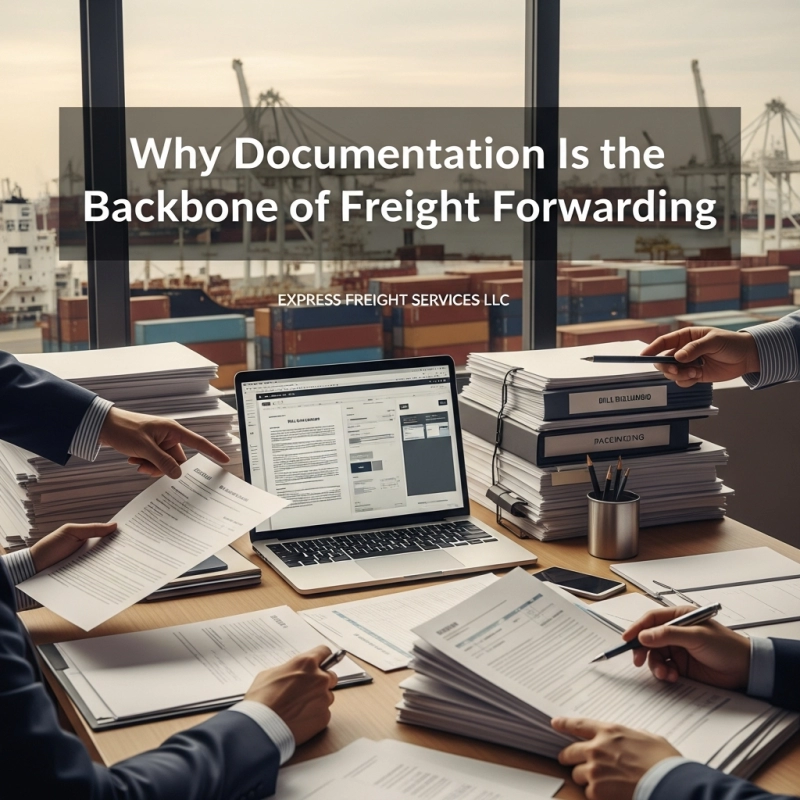
In global trade, cargo does not move on transport alone. It moves on paperwork. No matter how advanced logistics networks become, documentation remains the foundation of every successful shipment. Without the right documents prepared accurately and on time, even the fastest transport routes can come to a standstill.
For businesses relying on freight forwarding services, documentation is not an administrative formality. It is the backbone that supports compliance, transparency, cost control, and delivery reliability.
What Documentation Means in Freight Forwarding
Documentation in freight forwarding refers to all records required to move goods legally and efficiently from origin to destination. These documents communicate critical information to carriers, customs authorities, ports, banks, and buyers.
Freight forwarding services manage these documents to ensure shipments meet international trade, customs, and transportation regulations.
Why Documentation Is Critical in Freight Forwarding Services
Documentation Drives Legal Compliance
Every country enforces import and export regulations. Customs authorities rely entirely on documents to verify shipment value, classification, origin, and eligibility for clearance.
Without proper documentation, shipments can be delayed, fined, or rejected entirely.
Documentation Enables Cargo Movement
Carriers do not load, unload, or release cargo without approved documents. Transport documents act as proof of ownership, shipment instructions, and delivery authorization.
Freight forwarding services ensure these documents are issued correctly at every stage.
Core Documents That Support Freight Forwarding
Commercial Invoice
This document outlines shipment value, seller and buyer details, and product descriptions. It forms the basis for customs valuation and duty assessment.
Packing List
The packing list details cargo quantity, weight, and packaging type. It supports inspections and helps carriers and customs officers verify shipment contents.
Transport Documents
Bills of lading, airway bills, and consignment notes act as shipment contracts and cargo receipts. Errors here can stop cargo movement immediately.
Customs Declarations and Permits
Certain goods require licenses, certificates, or regulatory approvals. Freight forwarding services coordinate these documents to avoid compliance issues.
Role of Documentation in Customs Clearance
Customs clearance is entirely document driven. Customs officers assess risk, compliance, and duty obligations based on paperwork alone.
Accuracy Prevents Inspections
Incorrect descriptions, mismatched values, or missing information trigger inspections and shipment holds.
Consistency Builds Trust
Consistent documentation builds a positive compliance history, leading to faster clearance over time.
Documentation and Risk Management in Freight Forwarding
Reducing Financial Risk
Incorrect documentation can result in penalties, demurrage charges, storage fees, and cargo seizure.
Freight forwarding services reduce these risks by validating documents before submission.
Protecting Cargo Ownership
Transport documents serve as proof of ownership. Errors can delay cargo release or cause disputes between buyers and sellers.
Benefits of Strong Documentation Practices
Faster Transit Times
Well prepared documents allow shipments to move without unnecessary stops or inspections.
Lower Operational Costs
Reduced delays mean fewer storage charges, fewer penalties, and better cost predictability.
Improved Supply Chain Visibility
Accurate documentation improves shipment tracking and coordination across logistics partners.
Pros and Cons of Documentation Intensive Freight Forwarding
Pros
- Ensures legal compliance
- Reduces shipment delays
- Improves customs clearance speed
- Protects cargo ownership and value
- Strengthens global trade credibility
Cons
- Requires detailed attention and expertise
- Documentation errors can impact entire shipments
- Additional administrative effort for complex cargo
Professional freight forwarding services exist to manage these challenges efficiently.
Real World Examples of Documentation Impact
Importer Facing Clearance Delays
An importer experienced shipment delays due to incorrect invoice values. After engaging professional freight forwarding services, documentation accuracy improved and clearance times shortened.
Exporter Expanding into New Markets
An exporter entering a new region avoided regulatory penalties by relying on freight forwarders to manage permits and compliance documents.
LCL Shipments with Multiple Shippers
In consolidated shipments, one incorrect document can delay the entire container. Experienced documentation management prevents this risk.
How Freight Forwarding Services Manage Documentation Effectively
Centralized Document Control
Freight forwarding services act as a single coordination point for all shipment documents.
Regulatory Knowledge
Forwarders stay updated on changing customs rules, trade agreements, and compliance requirements.
Proactive Error Prevention
Documents are reviewed before submission to prevent clearance disruptions.
Why Documentation Matters More as Businesses Grow
As shipment volumes increase, documentation complexity also grows. Multiple destinations, varying regulations, and diverse cargo types increase compliance risk.
Strong documentation processes allow businesses to scale operations without logistics disruptions.
Why Choose Express Freight Services
Express Freight Services understands that documentation is the backbone of reliable logistics. Our freight forwarding services focus on documentation accuracy, regulatory compliance, and seamless coordination across transport modes.
By managing documentation professionally, we help businesses move cargo efficiently and with confidence.
Documentation is not just paperwork. It is the foundation that supports every successful shipment. Without it, even the best logistics plans fail.
For businesses engaged in global trade, investing in professional freight forwarding services ensures documentation accuracy, regulatory compliance, and uninterrupted cargo movement.
Reach us today
View More Blogs

How Much Does Air Freight to Rustaq Cost? A Guide for importers and exporters
Air freight to Rustaq costs depend on shipment weight, volume, route origin, and urgency, but most i...
Oman Customs Clearance Through Sohar Port: Documents, Duties and Cargo Release
Customs clearance through Sohar Port runs on Oman’s Bayan electronic platform, where importers sub...
LCL Shipping in Seeb in 2026: What Importers Should Know About Costs, Consolidation and Customs
LCL consolidation in Seeb means sharing a container with other importers so you pay only for the spa...