

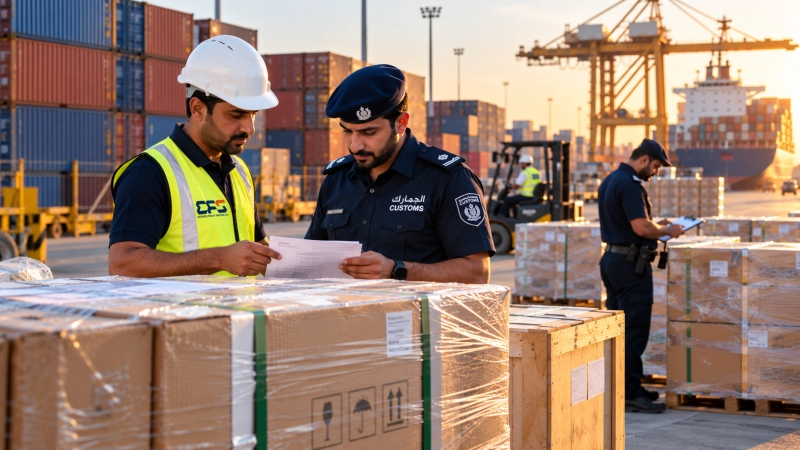
Customs clearance delays in Seeb typically stem from documentation errors, HS code misclassification, value discrepancies, or missing permits, and they can add anywhere from a few hours to several days to a shipment timeline. For importers routing goods through Seeb or nearby Muscat, understanding what triggers a hold at the border is the first practical step toward preventing one. Express Freight Services LLC regularly sees shipments stall for reasons that were entirely avoidable with better pre-clearance preparation.
What Actually Causes a Hold in Seeb
Most delays are not random. They follow a predictable pattern, and the most common trigger is paperwork that does not match across documents. A commercial invoice that lists a different quantity or product description than the packing list or bill of lading will almost always be flagged for manual review. The same applies to missing certificates of origin or permits for regulated goods such as electronics, chemicals, and certain specialized equipment.
HS code misclassification is another frequent cause. When the Harmonized System code on the declaration does not match what customs officers expect for the goods described, the shipment gets pulled for tariff recalculation or secondary inspection. Value discrepancies work the same way. Under-declaring to reduce duties or over-declaring for insurance purposes both invite scrutiny, and customs authorities in Oman will freeze the shipment until the declared value can be verified.
Even when paperwork is flawless, random physical inspections still happen. Standard containers and mixed LCL shipments are selected for checks as a matter of routine, not because anything looks wrong. System backlogs in the electronic clearance portal and unpaid duties also freeze cargo release, sometimes for longer than the inspection itself would take.
Delay Factors Quick Overview
The Seeb-Specific Context
Seeb sits just outside Muscat and handles a meaningful share of cargo moving through the capital area, including freight forwarding services in Seeb that connect road, air, and sea shipments. Clearance times in this corridor depend heavily on how well the importer or their broker has prepared the file before the goods arrive. Shipments coming from Dubai by road are common, and the Dubai-to-Muscat route has its own documentation rhythm that catches first-time importers off guard.
Experienced brokers consistently note that customs clearance in Seeb rewards importers who register with Oman Customs early and keep their importer profile current. Identity verification and registration are prerequisites, and delaying this step until a shipment is already in transit is a common mistake. It adds days that have nothing to do with the goods themselves.
How to Prevent Delays Before They Start
Pre-verifying paperwork is the single highest-impact action. Check that invoice descriptions, quantities, and values match the packing list and bill of lading exactly. Confirm the HS code with someone who knows the Omani tariff schedule, not just a generic international list. For regulated products, secure the required Omani permits before the cargo leaves the origin, not after it arrives.
Working with a broker or freight partner that understands LCL Consolidation Services in Seeb also helps. Consolidated shipments carry extra risk because one problematic consignment in a shared container can delay every other importer’s goods in that same box. A broker who reviews all consolidated documents before submission reduces that exposure.
Payment timing matters too. Duties and taxes must be settled before release, and waiting until the last moment to arrange payment is a self-inflicted delay. Confirm the payment method works with the current customs portal, because technical issues on either side can stall release even when funds are available.
What to Do When a Shipment Is Already Held
First, find out whether the hold is documentary, valuation-related, or a physical inspection. Documentary holds are usually the fastest to resolve if the correct paperwork can be produced quickly. Valuation holds take longer because they require evidence of the true transaction value. Physical inspections follow customs’ own schedule, and pushing too hard rarely speeds them up.
If the delay involves restricted goods, do not attempt to reclassify or disguise the item to get it through. That converts a delay into a compliance violation, which is far more expensive and time-consuming to resolve. Instead, work with the broker to supply the missing permit or find a lawful alternative.
If a shipment is stuck or you want to avoid a hold before it happens, get in touch with Express Freight Services to review your documentation and clearance plan before the cargo reaches Seeb.
FAQ
1.How long after customs clearance does delivery happen?
Once customs releases a shipment in Oman, final delivery typically happens within the same day or the next business day for local destinations, depending on the transporter’s schedule and the delivery location’s accessibility.
2.Why are international shipments taking so long?
International shipments face multiple touchpoints: origin handling, transit, customs clearance at destination, and final delivery. Delays at any single point, especially documentation holds or inspection backlogs at customs, can extend the total timeline by days even when the physical transit was on schedule.
3.How long does it take for customs clearance to be completed in Dubai?
Dubai customs clearance is generally fast when documentation is complete, often within a few hours to one day for standard cargo. However, inspections, value verification, and missing permits can extend this to several days.
4.How much is a customs clearance fee?
Customs clearance fees vary based on the shipment type, value, commodity classification, and the service provider involved. Rather than a fixed amount, importers should expect the total to reflect duty and tax amounts plus the broker’s service charge, which depends on the complexity of the file.
View More Blogs


Shipping from Seeb to the UAE: Road Freight, Customs and Transit Times
Shipping from Seeb to the UAE is primarily a road freight operation. Most shipments move by truck th...

Air Freight Cost from Dubai in 2026: Rates, Chargeable Weight and Hidden Fees
Air freight from Dubai typically runs between AED 12 and AED 40 per kilogram depending on destinatio...

Road Freight to Khasab from the UAE: Documents, Costs and Delivery Planning
Road freight from the UAE to Khasab moves through the Musandam Peninsula, combining standard GCC tru...